
Tree Disease Diagnosis Austin, TX
Professional tree disease diagnosis in Austin using certified expertise and lab testing for oak wilt and fungal infections.
Local Tree Disease Diagnosis Expertise
In Austin, healthy trees face serious threats from fungal and vascular diseases. Early diagnosis is the difference between saving and losing valuable oaks, maples, and elms. Our certified arborists identify tree diseases accurately using field expertise and lab partnerships, so you know exactly what's happening and what comes next.
How We Diagnose Tree Disease
Our diagnostic process combines visual inspection with lab confirmation to rule out stress factors and identify disease with confidence.
Visual Assessment
We examine leaf color, veinal patterns, bark condition, and canopy shape. Weather stressors, root issues, and past pruning wounds all tell us what may be causing decline.
Property Pattern Review
We map which trees show symptoms and track how decline spreads. Mortality patterns reveal whether disease is moving through root grafts or affecting isolated specimens.
Lab Confirmation
When visual signs are unclear or early-stage, we send leaf or wood samples to Texas A&M for pathology testing. Lab results remove guesswork.
You always know what's happening—and your next step is clear.
What Symptoms Tell Us
Oak wilt is one of the most destructive tree diseases in the United States, and it is killing oak trees in central Texas at epidemic proportions. In Austin, live oaks suffer most, but red oaks decline fastest. Leaf browning, veinal discoloration, and sudden leaf drop are hallmark signs.
The presence of mushrooms, fungal conks, oozing bark, or discolored patches often signals decay or infection. These signs should never be ignored, as they usually point to internal issues that compromise stability. However, drought stress, freeze damage, and nutrient deficiency can look similar. This is why proper diagnosis matters.
E-E-A-T Note: Our team reviews Austin's seasonal weather patterns and current soil conditions during every diagnosis—heat spikes, drought windows, and clay soil impacts all influence what we see in the canopy.
Beyond Oak Wilt: Other Austin Tree Diseases
Oak wilt dominates headlines, but Austin's urban forest faces other serious threats. Root rot, hypoxylon canker, and leaf spot disease affect maples, elms, pecans, and other native species across neighborhoods from South Austin to North Austin.
Armillaria root rot is a soil-borne fungal disease that affects a wide variety of tree species, including oak, pine, pecan, and elm. The fungus thrives in moist conditions, and it can be especially problematic after heavy rainfall or irrigation. Clay-heavy soils and summer humidity create ideal conditions for these pathogens. Early detection prevents rapid spread to adjacent trees.
Our Services
From diagnosis to treatment planning, we deliver science-backed expertise for every tree health concern in Austin.
Tree Health Assessment
A full tree health assessment identifies structural weakness, pest damage, disease risk, and care needs. We examine crown density, branch attachment, root collar health, and overall vigor. Results guide pruning, fertilization, and prevention strategies.
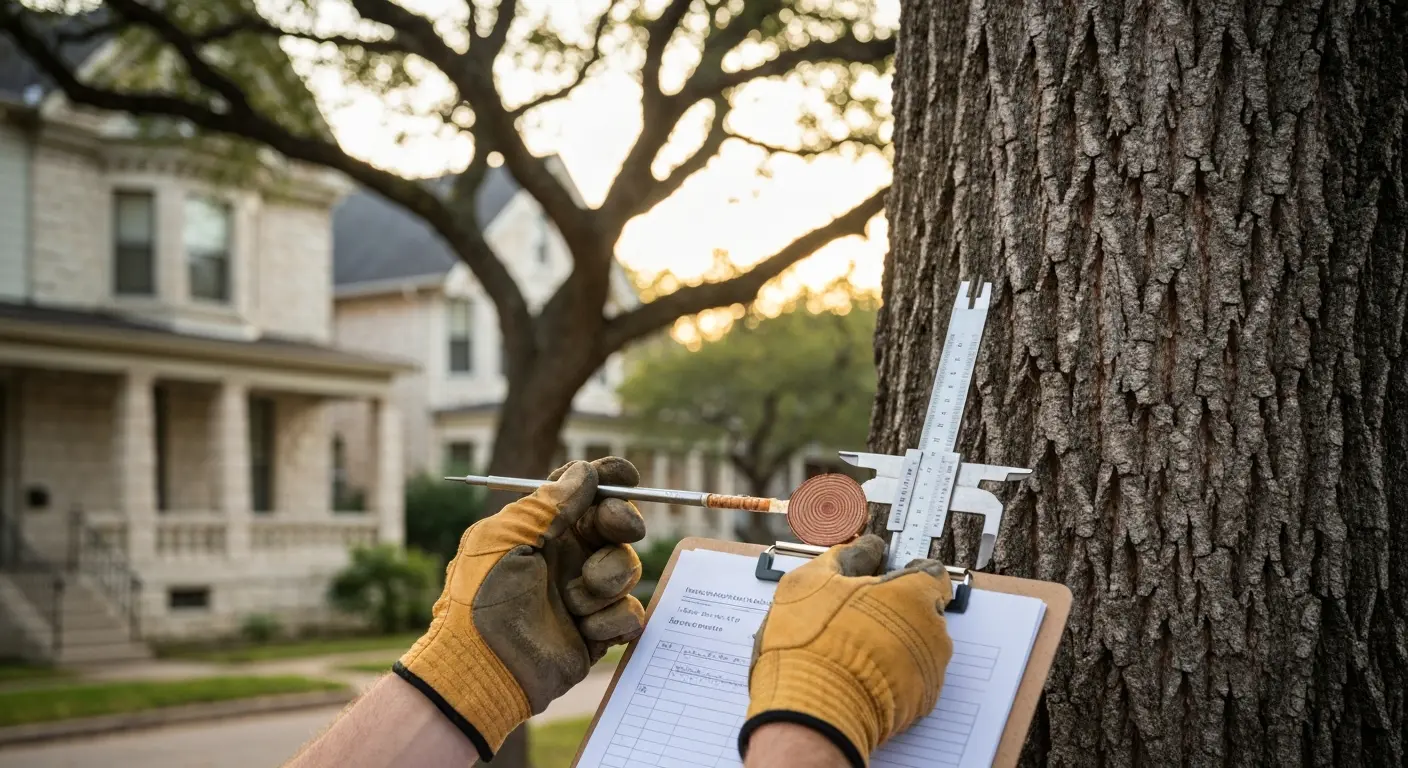
Comprehensive canopy inspection in Central Austin neighborhoods
Disease Identification & Lab Testing
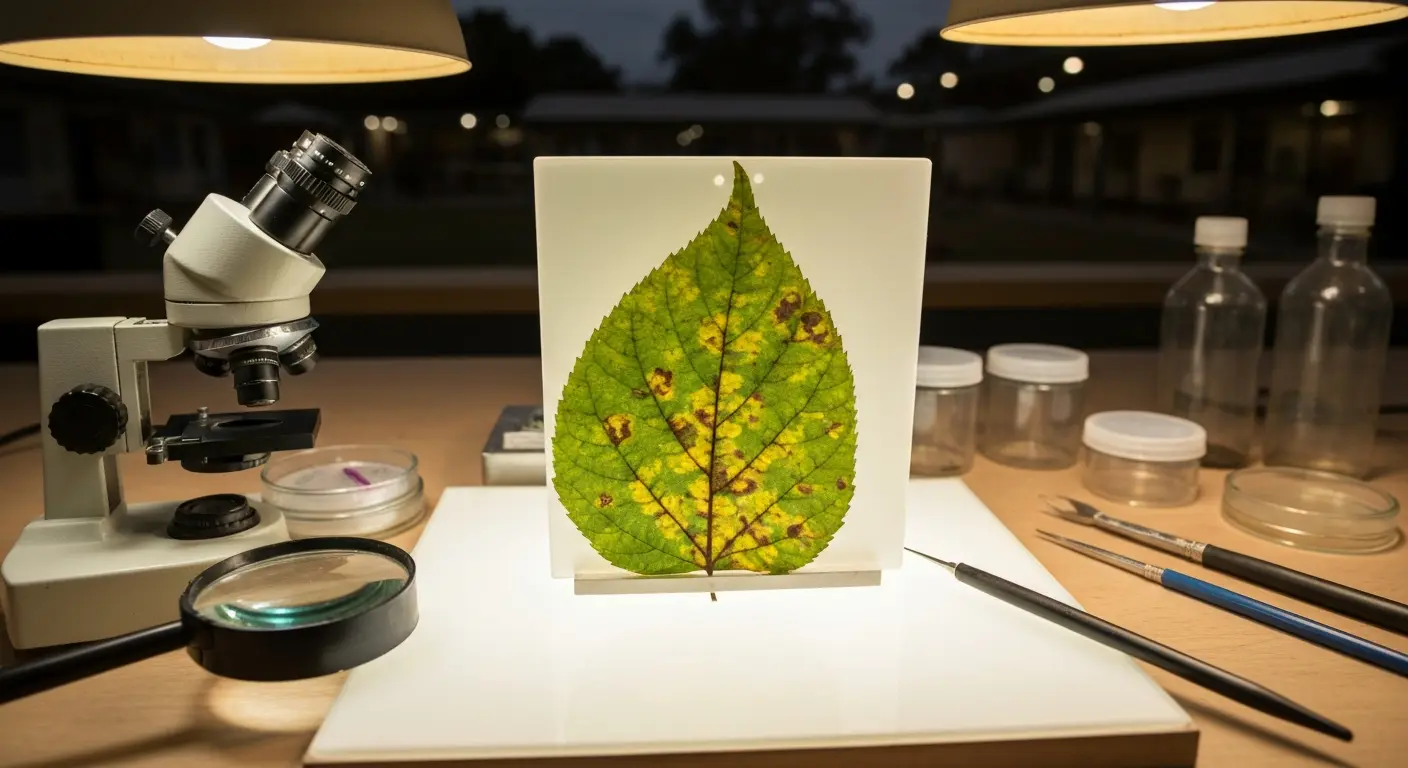
Leaf sampling and pathology confirmation for accurate diagnosis
Diagnosing oak wilt properly is key, as management plans and costs can be extensive. We combine field observation with laboratory analysis. When diagnosis is unclear, samples go to Texas A&M Plant Pathology Lab. This removes doubt and ensures treatments address the actual problem.
Oak Wilt Qualification & Prevention
While the oak wilt fungus will still spread through root systems even when trees are treated, a carefully timed fungicide injection can save oak trees. Our Texas Oak Wilt Qualified arborists understand infection timing, treatment windows, and prevention measures. We help protect neighboring trees and manage infected groves.
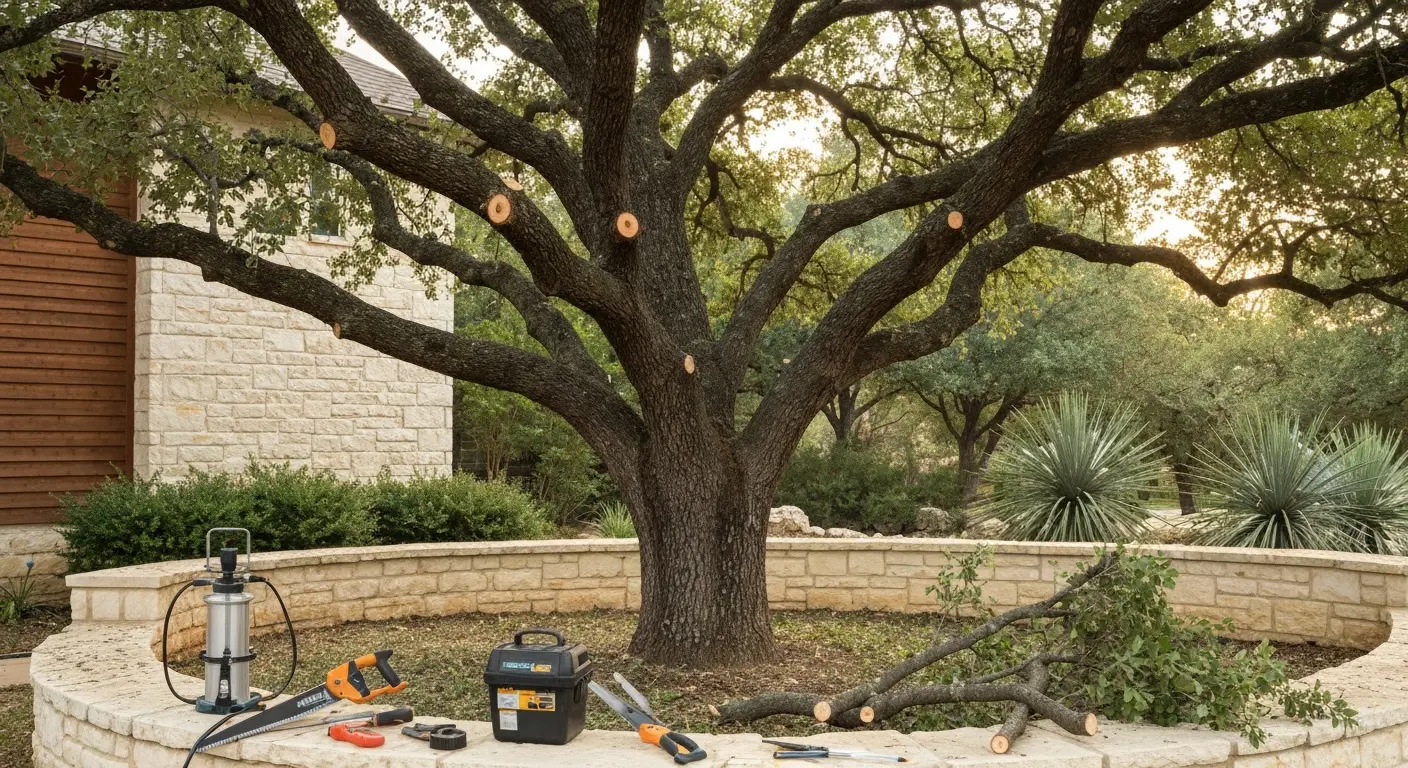
Oak wilt management in residential and commercial properties across Austin
Pruning to Reduce Disease Risk
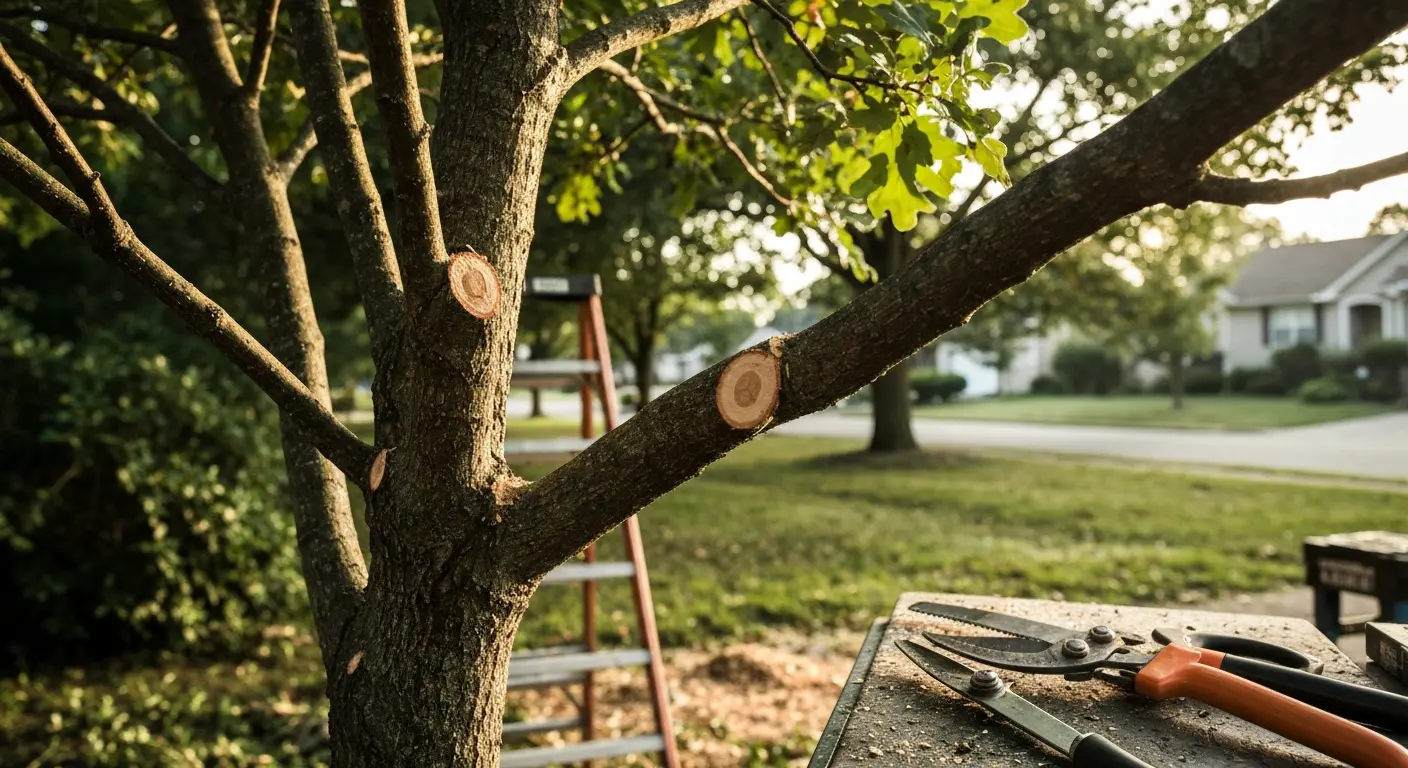
Proper pruning technique minimizes infection risk in oak trees
Although you can prune at any time of year, the best time to prune oaks is July through January. That's when fungal spores are least likely to infect a tree. We follow Austin's oak wilt prevention guidelines and always seal cuts. Poor pruning creates wounds that attract beetles and disease vectors—we avoid that risk.
Tree Fertilization & Stress Management
Nutritional deficiency weakens trees and makes them vulnerable to disease. We assess soil conditions and recommend deep-root fertilization or targeted nutrient applications. Healthier trees resist pathogens better and recover faster from stress.
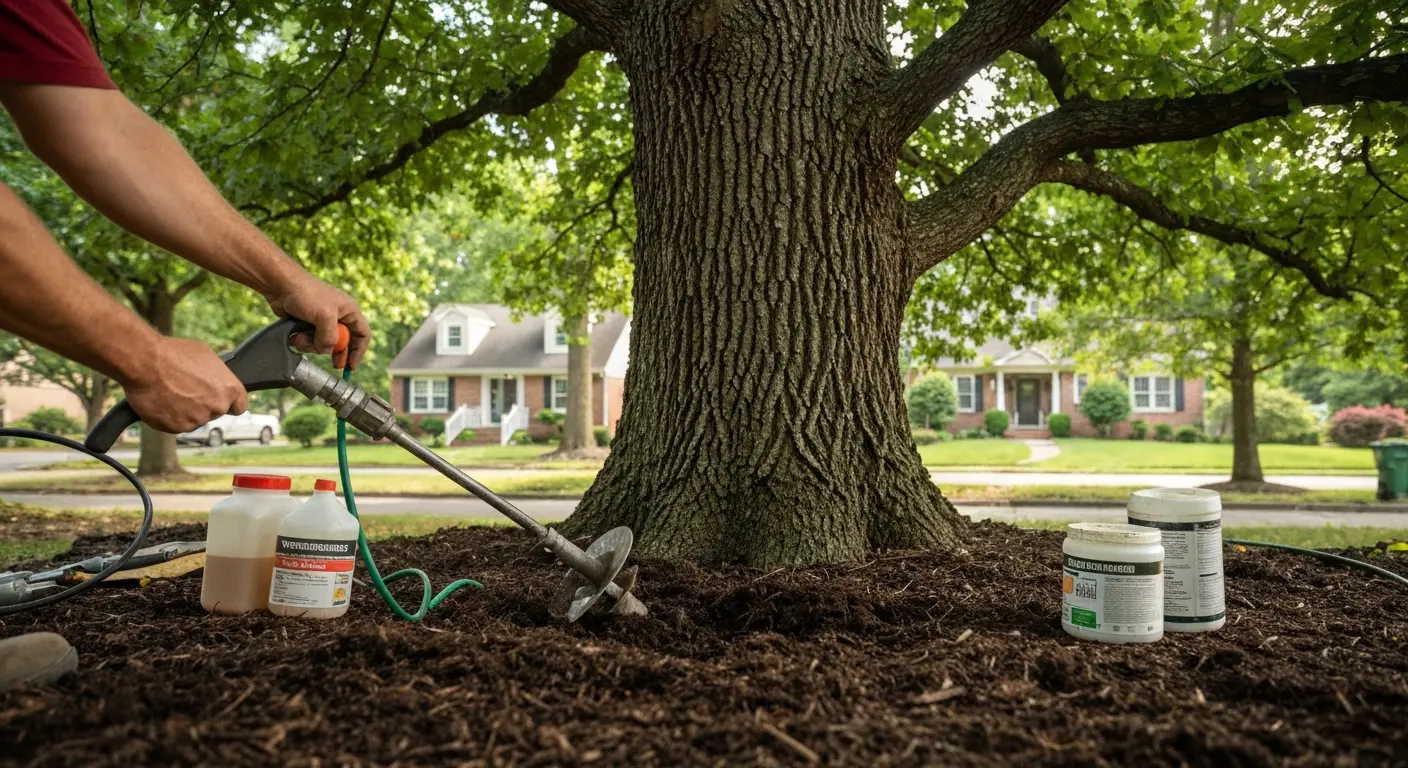
Nutrient application to support immune resilience in stressed oaks
Why Diagnosis Matters
Accurate diagnosis stops wasted effort and expense. It also prevents harm to healthy trees.
Protect Your Investment
Mature trees provide cooling, property value, and neighborhood character. Urban trees offer a range of benefits, from lowering temperatures and improving air quality, to boosting physical and mental health. Missing early disease signs often means removing a 30-year-old oak that could have been saved. Diagnosis preserves what matters.
Prevent Spread to Neighbors
Oak wilt does not respect property lines. Live oaks are less susceptible than red oaks, but are the most seriously infected species due to grafted root systems that allow the fungus to spread among adjacent trees. Knowing what you have—and treating it properly—protects your neighbors' trees too. Community response saves urban forests.
Build a Long-Term Care Plan
Diagnosis is step one. From there, we develop a plan: which trees need treatment, which need preventive pruning, which soil amendments help recovery. This roadmap keeps your trees healthy and avoids reactive emergency removals.
Serving Austin and Surrounding Areas
Local expertise grounded in Central Texas tree health challenges.
Austin Tree Health & Climate
Austin's hot summers, clay soils, and intermittent drought create stress that makes trees vulnerable to fungal invasion. We understand how local climate patterns affect disease pressure and tree recovery. Every diagnosis accounts for Austin-specific factors.
Local Factor: South Austin and Zilker neighborhoods show high oak density and frequent oak wilt pressure due to shared root systems and historic tree preservation. North Austin development patterns differ, affecting species mix and disease risk profiles.
Ready to Know What's Wrong?
Schedule a tree disease diagnosis in Austin today. Our certified arborists will assess your trees, answer your questions, and recommend next steps. No guessing. No surprises.
Call us or request a free estimate online to get started.
Frequently Asked Questions
Common questions about tree disease diagnosis in Austin.
What is the difference between oak wilt and drought stress?
Oak wilt shows veinal leaf discoloration and rapid canopy loss on adjacent grafted trees, while drought causes uniform browning across the tree. Our diagnosis distinguishes these by examining leaf pattern, mortality spread, and soil moisture history.
How much does tree disease diagnosis cost in Austin?
Contact us for a free initial estimate. Complex cases requiring lab testing involve material fees. We'll explain costs upfront before any work begins.
Can infected trees be saved, or do they always need removal?
Treatment success depends on disease type, tree species, and infection stage. Live oak wilt can sometimes be managed with fungicide injection and root isolation. Red oak wilt is usually fatal. We assess each tree individually and discuss realistic options.
What should I do if my neighbor's oak is infected?
Infected oaks threaten your trees through root grafts. Contact your neighbor and share our diagnosis findings. Group prevention efforts—coordinated pruning, treatment, and root barriers—are most effective in stopping disease spread across neighborhoods.
When should I call an arborist about my tree?
Call if you notice leaf browning, veinal discoloration, sudden defoliation, fungal growth, oozing bark, or visible decline. Early diagnosis saves trees. Don't wait for major symptoms—we can catch many diseases in early stages.
Are there tree species resistant to oak wilt in Austin?
White oak varieties, bur oak, and Mexican white oak show resistance. Live oaks and red oaks are susceptible. A Qualified Arborist can diagnose tree problems and provide treatment recommendations. We recommend species diversity to reduce disease risk long-term.
DISCOVER WHAT OUR CUSTOMERS HAVE TO SAY ABOUT US
REVIEWS
proudly serving these areas
Austin, TX
Dripping Springs, TX
Georgetown, TX
Spicewood, TX
Wimberley, TX
Lakeway, TX
Cedar Park, TX
Liberty Hill, TX
READY TO take the next step?
get a free quote TODAY!
QUICK LINKS
our services
service areas
operating HOURS
Mon: 6:00 am - 9:00 pm
Tue: 6:00 am - 9:00 pm
Wed: 6:00 am - 9:00 pm
Thu: 6:00 am - 9:00 pm
Fri: 6:00 am - 9:00 pm
Sat: 6:00 am - 9:00 pm
Sun: -- - --