
Tree Service in Georgetown, TX
Local Tree Service Expertise
In Fountainwood and across Georgetown, TX, mature live oaks, pecans, and cedar elms face unique challenges from oak wilt, drought stress, and unpredictable spring storms. This page covers tree service in Georgetown, TX for homeowners and businesses who need expert arborist care. We explain how trimming, removal, and health assessments protect your property and landscape value year-round.
How We Work
A clear, methodical process so you know what happens next.
Site Assessment
We walk your property and identify tree hazards, health issues, and structural concerns. Notes on site access and neighborhood logistics guide the plan.
Care Plan & Permits
We recommend trimming, removal, or health treatment. For protected trees in Georgetown, we handle permitting so you stay compliant with city ordinances.
Crew Brief & Execution
Our crew confirms access routes and parking. Work happens with minimal disruption. We stay on schedule and respect your neighborhood environment.
Cleanup & Follow-Up
All debris is removed or chipped. We leave your property clean and provide a written summary with recommendations for ongoing tree health.
You'll always know what's happening next—and why.
Our Services
Tree Trimming & Pruning
Georgetown's live oaks and pecans thrive with selective pruning that removes crossing branches, improves canopy structure, and reduces limb failure risk during spring storms. We follow ANSI A300 standards and prune only when it supports long-term health.
- Crown reduction for mature shade trees in Berry Creek and Serenada
- Hazard pruning to remove dead or weak limbs near homes and power lines
- Seasonal pruning windows aligned with tree biology and Georgetown weather
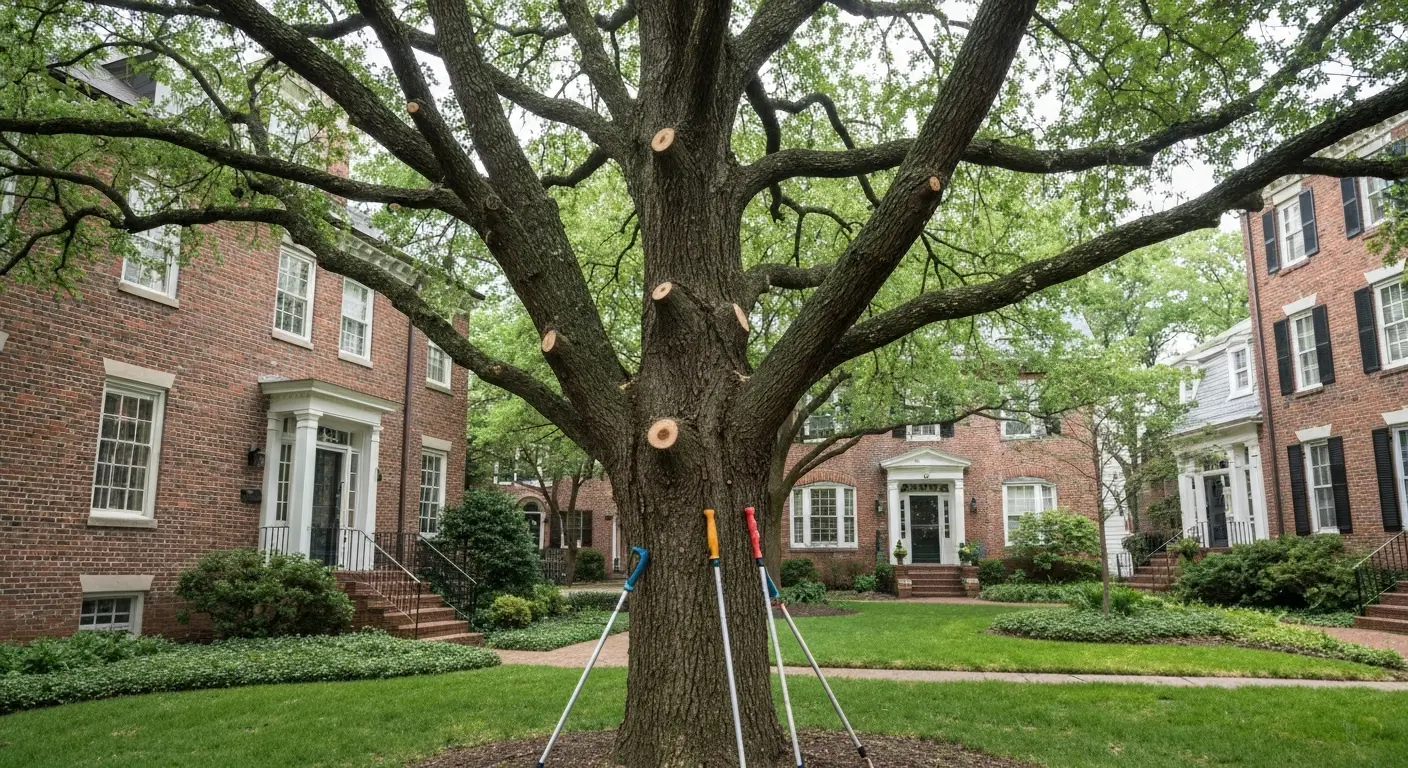
Crown pruning preserves mature oaks in historic neighborhoods like Old Town Georgetown
Tree Removal & Lot Clearing
When a tree is diseased, structurally unsafe, or poses a risk, safe removal with full debris cleanup is the answer. We handle permits for protected trees and manage rigging in tight spaces near homes or fencing.
- Precise removal of large oaks and pecans with minimal property disruption
- Lot clearing for new construction or landscape renovation
- Stump grinding below ground level for full site reclamation
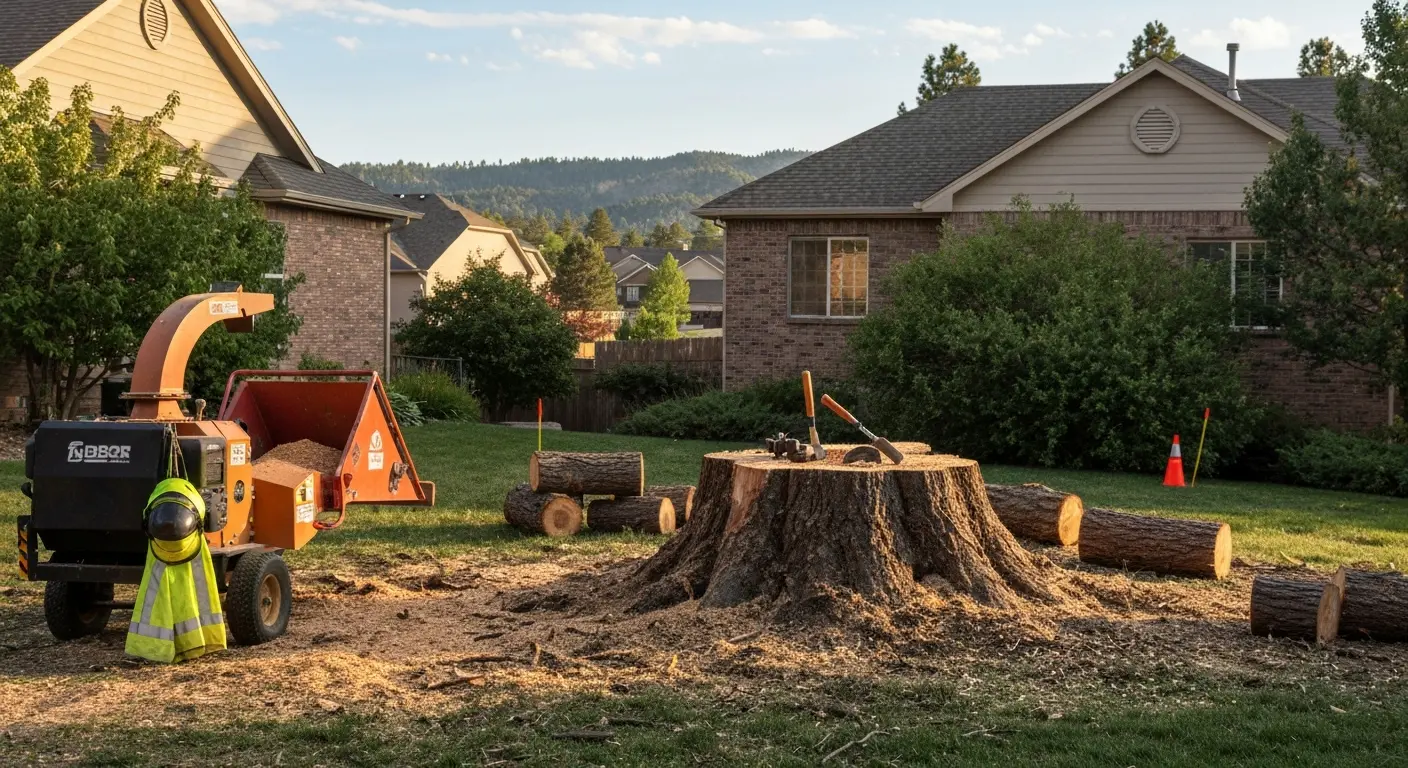
Safe removal of hazardous trees near homes in Wolf Ranch and Cimarron Hills
Oak Wilt & Tree Health Treatment
Oak wilt is prevalent across Williamson County. Drought stress weakens root systems. We diagnose problems early and recommend soil analysis, fertilization, or preventive treatment to extend tree life and prevent costly removals.
- Oak wilt evaluation and prevention strategies
- Soil aeration and fertilization for drought-stressed trees
- Cabling and bracing to support weakened branches and codominant trunks
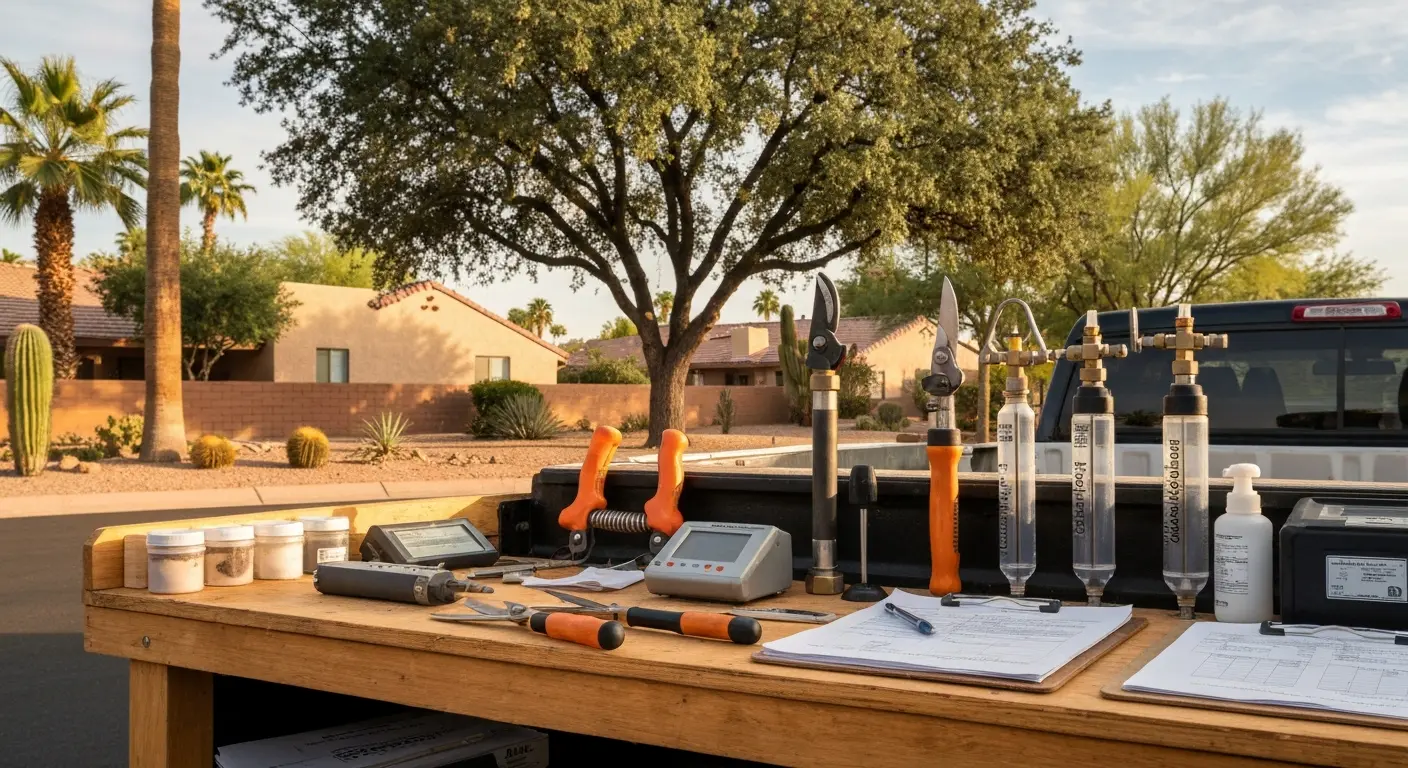
Health assessment and preventive care for century-old oaks in Sun City and established neighborhoods
Storm Damage Cleanup & Emergency Response
Unpredictable spring and ice storms can snap branches and fell trees. We respond to urgent calls to clear hazards, document damage for insurance, and restore property access and safety.
- Emergency removal of fallen trees and hanging limbs
- Tree risk assessment and liability documentation
- Full debris cleanup and site restoration
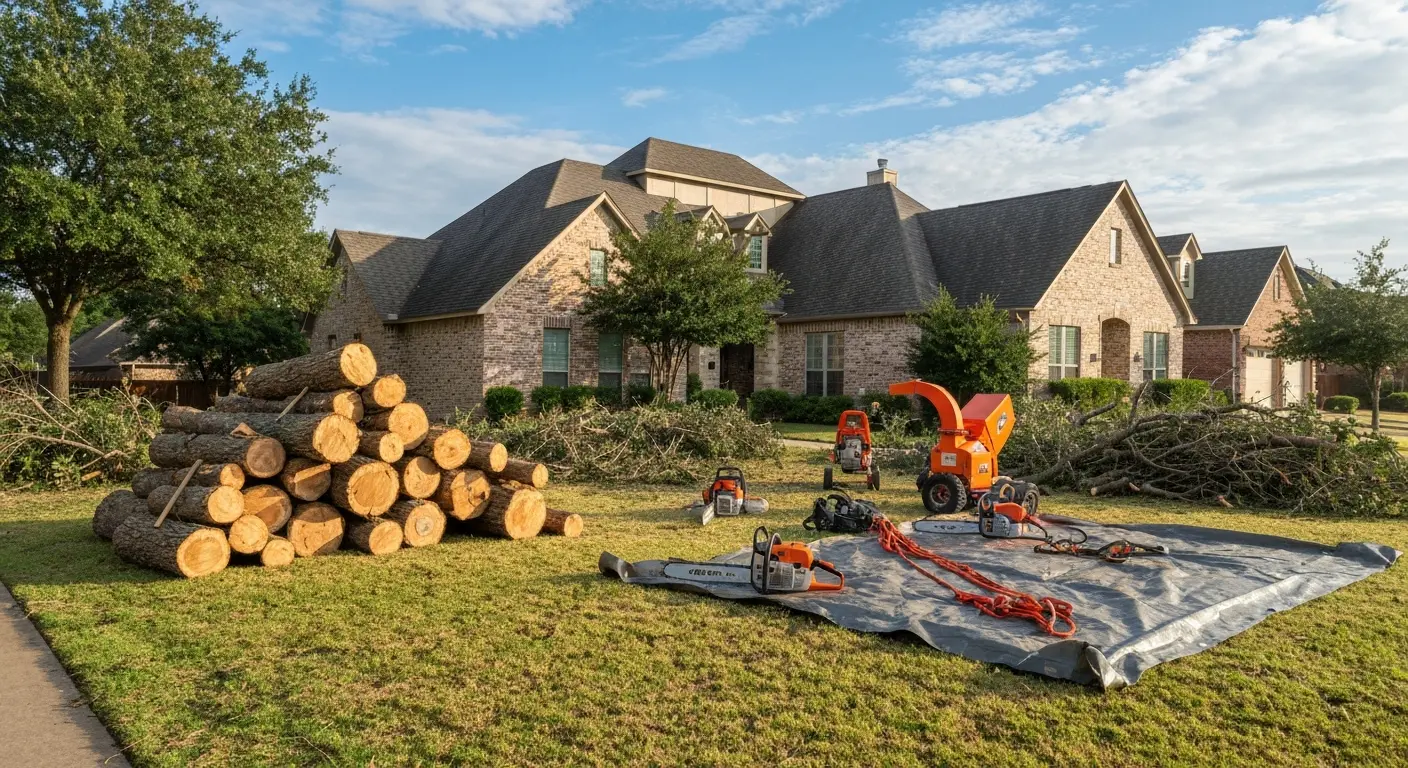
Emergency response after spring storms in Georgetown's established neighborhoods
Why Local Expertise Matters
Georgetown's trees are diverse and historic. From towering live oaks shading century-old neighborhoods to fast-growing species in new master-planned communities, each property has distinct care needs.
Protected trees with trunks 26 inches or larger require permits. Removing without approval can result in fines exceeding $5,000. We handle all permitting.
The Three Big Tree Challenges
Central Texas live oaks, post oaks, pecans, and cedar elms thrive in Georgetown's climate but face relentless pressures. Early diagnosis prevents emergency removals and protects property value.
- Oak Wilt: A fungal disease that attacks the vascular system, killing trees in weeks or months
- Drought Stress: Multi-year dry periods weaken root systems and invite secondary pests and diseases
- Storm Damage: Ice and spring winds snap branches and split trunks without warning
Our ISA-certified arborists identify these issues early and recommend the right treatment before they become emergencies.
Coverage Area & Local Knowledge
We serve all of Georgetown and surrounding neighborhoods. Our team is familiar with each area's tree species, soil conditions, HOA rules, and unique challenges.
Historic Downtown & Old Town
Majestic pecan trees and century-old oaks frame the courthouse square. We preserve these heritage specimens while respecting local historic preservation guidelines.
Golf Course Communities
Berry Creek and Cimarron Hills feature tree-filled lots with estate-sized properties. We manage mature canopies and coordinate work with HOA requirements.
Wooded Master-Planned Communities
Fountainwood Estates and Serenada are heavily wooded with native oaks and cedars. We manage dense canopies and large lots for residential and HOA properties.
Active Adult Communities
Sun City Texas and similar 55+ communities rely on strategic tree maintenance for curb appeal and safety. We coordinate with community managers and associations.
Getting Here
Georgetown is located 30 miles north of Austin along I-35 in Williamson County. Our team serves all neighborhoods from downtown to the Hill Country edges, with easy access from Austin and Cedar Park.
Frequently Asked Questions
What makes tree care in Georgetown different from other Texas cities?
Georgetown sits in the heart of Texas Hill Country with unique soil composition, unpredictable drought cycles, and oak wilt pressure across Williamson County. Our certified arborists understand these local challenges and provide proactive care to prevent emergency removals.
Do I need a permit to remove a tree in Georgetown?
Yes. Protected trees with trunk diameters of 26 inches or more on residential property and 12 inches or more on commercial property require city approval. We handle all permitting and ensure your project stays compliant with Georgetown's tree ordinances.
What is oak wilt and how do I know if my trees have it?
Oak wilt is a fungal disease that attacks the vascular system of live oaks and red oaks. Signs include brown discoloration in the wood, wilting leaves, and rapid decline. Our ISA-certified arborists can diagnose the disease and recommend prevention or treatment strategies to protect surrounding trees.
When is the best time to trim trees in Georgetown?
Spring and fall bring unpredictable weather patterns that test every branch. We prune during windows that support recovery and reduce disease risk, aligning our work with each tree's natural growth cycle and Georgetown's seasonal patterns.
Does your team serve HOA properties in master-planned communities?
Yes. We provide comprehensive tree care for HOA properties in Wolf Ranch, Serenada, Berry Creek, and other Georgetown communities. We understand HOA guidelines and coordinate work with property managers and boards.
What do you do with debris after tree removal?
We remove all debris or chip it for mulch. Your property is left clean and ready for replanting or other landscaping work. Full site cleanup is part of every job.
DISCOVER WHAT OUR CUSTOMERS HAVE TO SAY ABOUT US
REVIEWS
proudly serving these areas
Austin, TX
Dripping Springs, TX
Georgetown, TX
Spicewood, TX
Wimberley, TX
Lakeway, TX
Cedar Park, TX
Liberty Hill, TX
READY TO take the next step?
get a free quote TODAY!
QUICK LINKS
our services
service areas
operating HOURS
Mon: 6:00 am - 9:00 pm
Tue: 6:00 am - 9:00 pm
Wed: 6:00 am - 9:00 pm
Thu: 6:00 am - 9:00 pm
Fri: 6:00 am - 9:00 pm
Sat: 6:00 am - 9:00 pm
Sun: -- - --