
Tree Service in Spicewood, TX
Local Tree Service Expertise
Spicewood sits atop the Hill Country's rocky Balcones Escarpment where oak, cedar, and juniper thrive on sprawling 1-to-5-acre properties. Whether you're managing wildfire risk around Briarcliff, pruning overgrown limbs near Lake Travis, or clearing invasive cedar to restore native habitat, arborist service in Spicewood, TX addresses challenges that city crews don't see. Large lots, mixed tree species, and permits tied to heritage trees (24+ inches at trunk base) make local expertise non-negotiable. We work with your property's unique scale and the Hill Country's soil and climate.
How We Work
Clear steps from assessment through cleanup—no surprises, no rushed work.
Site Walk & Assessment
We inspect trees, soil, structures, and access. Check for permits, HOA restrictions, and wildfire hazards specific to your Hill Country lot.
Plan & Permissions
We handle permit paperwork for heritage trees, confirm HOA approval if your property is gated, and explain all options before work starts.
Precision Execution
Trimming, removal, or brush clearing—all done with certified climbers, insurance, and equipment sized for rural properties and rocky terrain.
Final Cleanup
Haul away debris, mulch on-site or stack for removal, leave your yard clean and ready for what's next—landscaping, construction, or rest.
You'll always know what's happening next—and why it matters.
Our Services
Tailored to Spicewood's mix of heritage oaks, cedar overgrowth, and sprawling acreage.
Tree Trimming & Pruning
Shape live oaks and cedar elms for health and safety. Crown thinning opens sunlight to understory. Deadwood removal cuts hazard risk in high-wind Hill Country weather. Wildfire-ready pruning clears 10-foot clearance around structures near Briarcliff and lakeside communities.
- Crown thinning—lets light through, reduces storm load
- Hazard removal—fallen limbs, dead branches
- Defensible-space prep—10-foot clear zones for fire safety
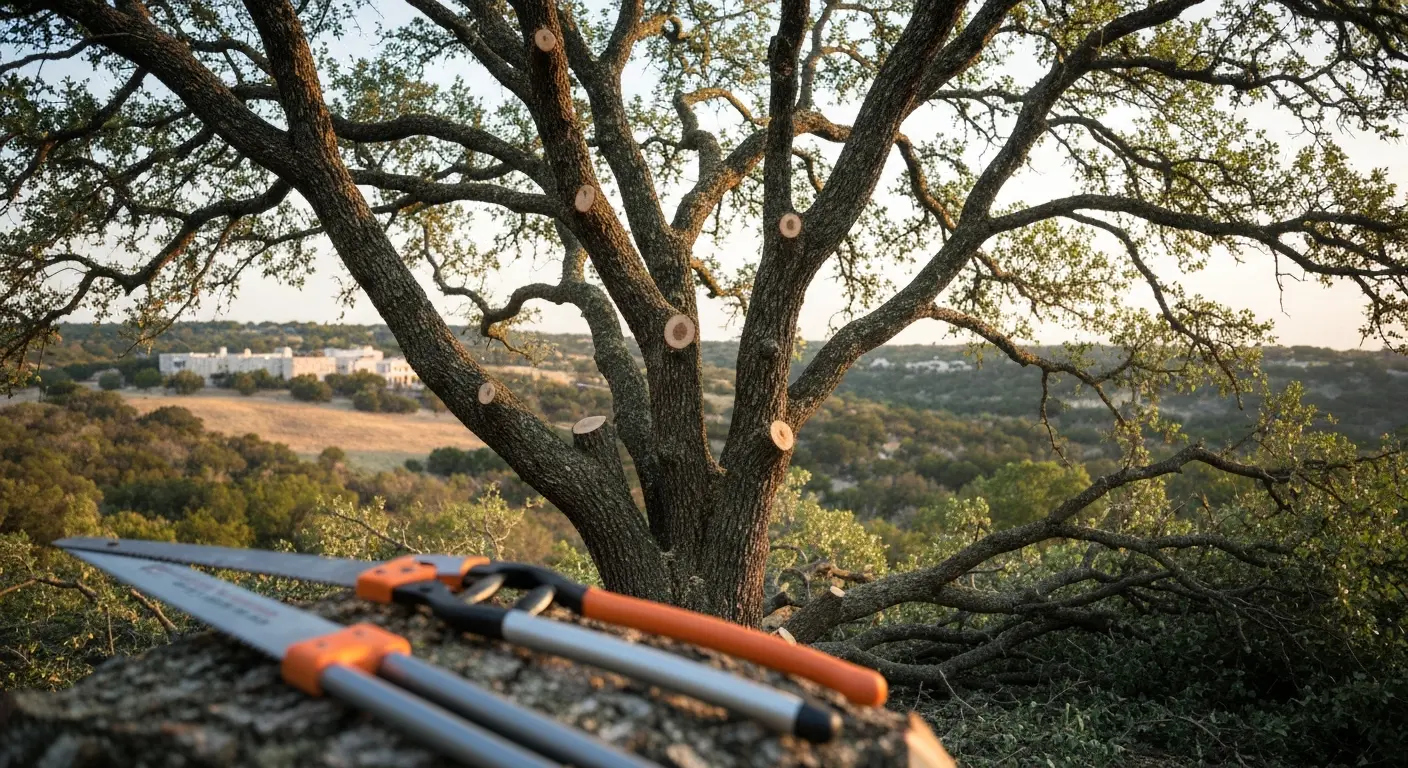
Crown thinning on mature oak near Lake Travis—opens sightlines and improves health.
Tree Removal
Safe felling of hazardous, dead, or unwanted trees on acreage and steep terrain. Spicewood's rocky soil and limited road access require precision—crane services for tight spaces, expert rigging to protect homes and utilities. Permits filed for heritage trees (24+ inches diameter).
- Standard felling with chip or haul-away
- Crane removal—steep slopes, tight clearance
- Heritage-tree permits—handled by certified arborists
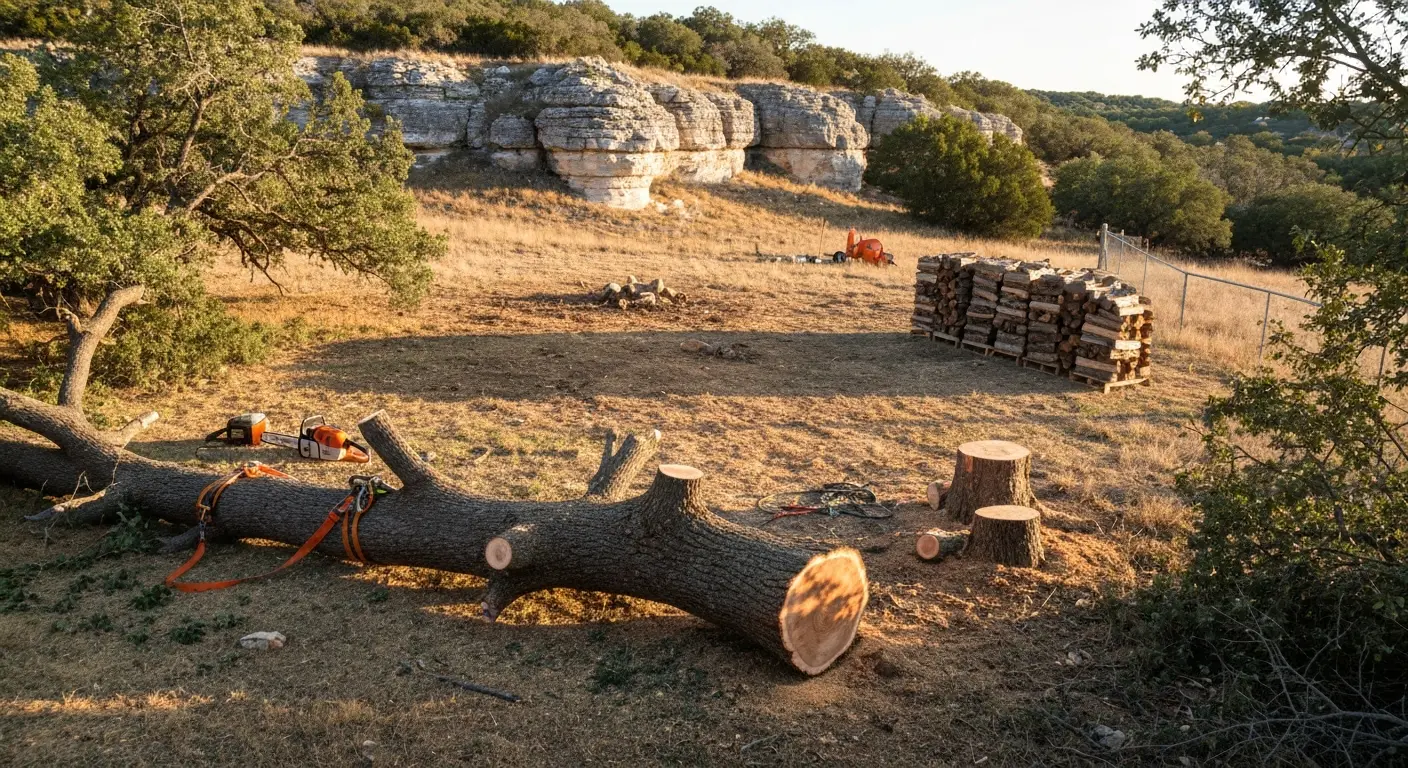
Safe removal of large cedar from rolling Hill Country acreage near Marble Falls highway.
Cedar & Brush Clearing
Spicewood's Ashe juniper (cedar) spreads fast, drinks water, and fuels wildfires. Strategic removal opens room for native live oaks and post oaks. Mulching on-site enriches soil; haul-away also available. Reduces allergy season pollen in the neighborhood.
- Selective cedar removal—spare your heritage oaks
- Forestry mulching—nutrient-rich ground cover stays on-site
- Fire-risk reduction—clears understory, opens canopy
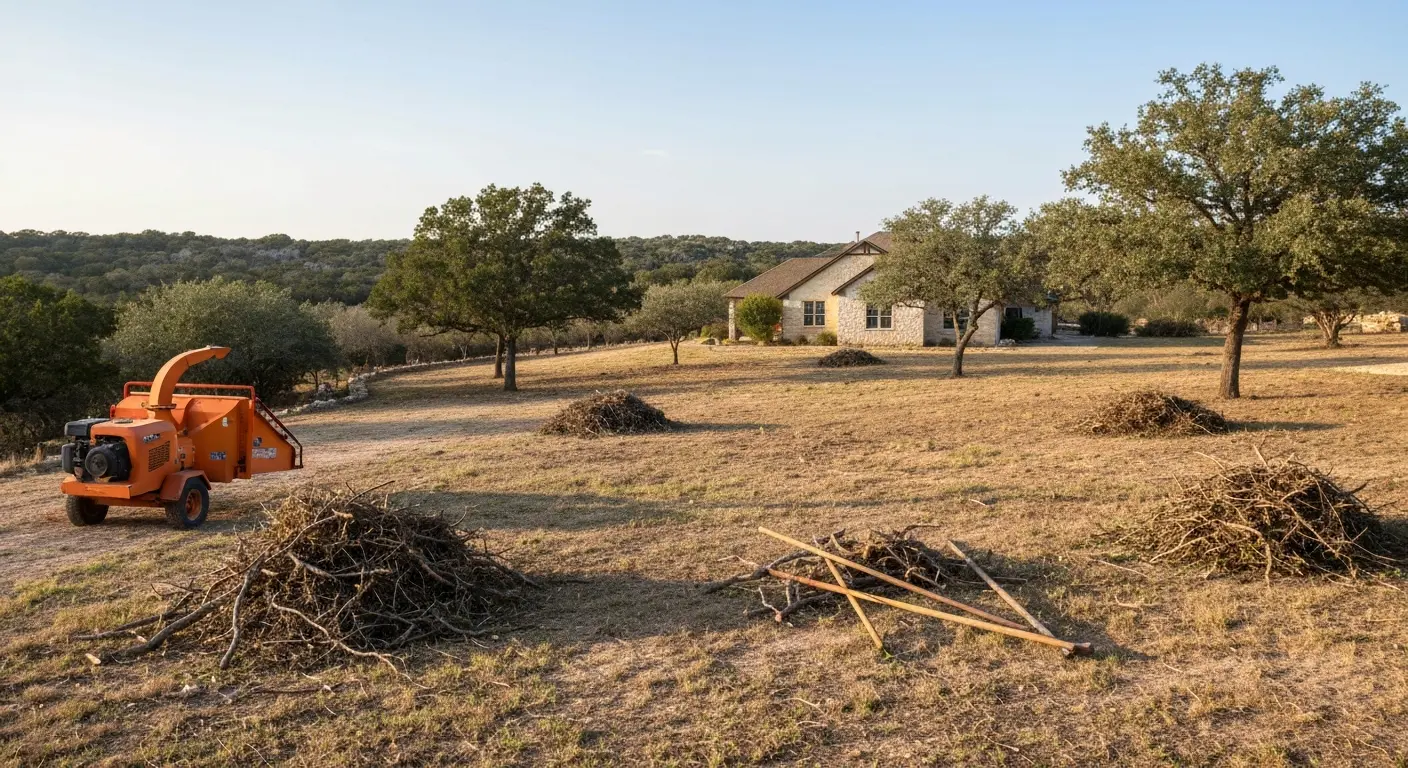
Wildfire-ready brush clearing on a 5-acre Spicewood property—defensible space created.
Emergency & Storm Response
Hill Country thunderstorms knock down limbs and snap trunks. We clear blocked driveways, fell dangerous hung-up trees, and haul debris—all with minimal damage to your landscape. Licensed, insured, and trained in high-risk situations.
- Emergency call-out availability—weather-related hazards
- Fallen-limb cleanup—driveway access restored
- Property protection—careful rigging to avoid structures
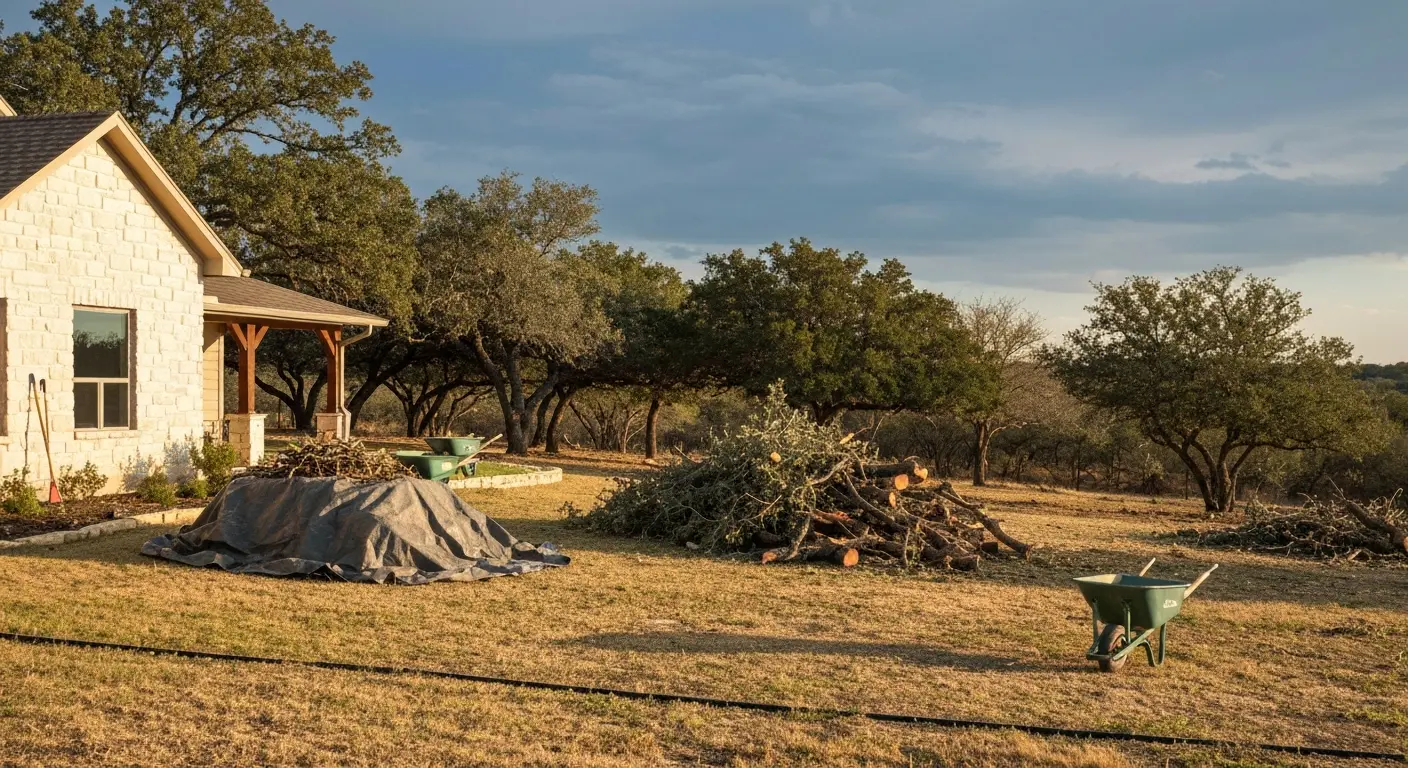
Storm damage response on Spicewood property—safe removal and full cleanup.
Lot Clearing & Land Prep
Preparing raw land for building, landscaping, or ranching near Hollingsworth Corner and beyond. Remove dead timber, rock-clear rocky sites, mulch invasive growth. We work with builders, developers, and homeowners—leaving usable, level ground ready for next steps.
- Selective clearing—protect mature specimens
- Rock grinding—limestone breaks down for construction
- Site access—roads cleared, level surfaces prepped
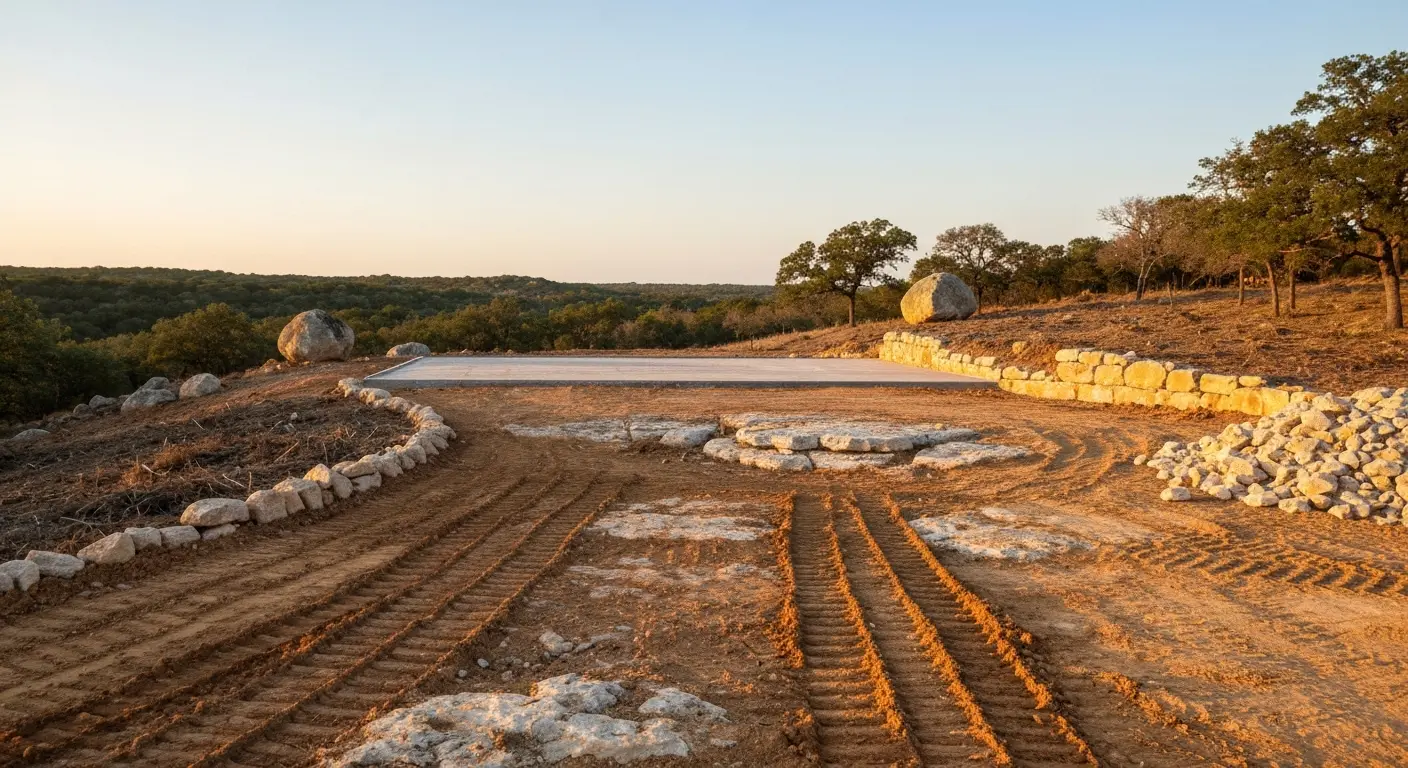
Land prep for new construction—rocky Hill Country terrain flattened and cleared.
Why Local Expertise Matters in Spicewood
Large lots, native oaks, and wildfire risk aren't typical urban problems.
Heritage Tree Permits
Spicewood and surrounding Travis County protect trees 24+ inches in diameter. Removing one without approval brings fines and mandatory replanting. We file paperwork, guide you through the process, and often find alternatives—pruning or shaping instead of felling—that keep your landscape intact and legal.
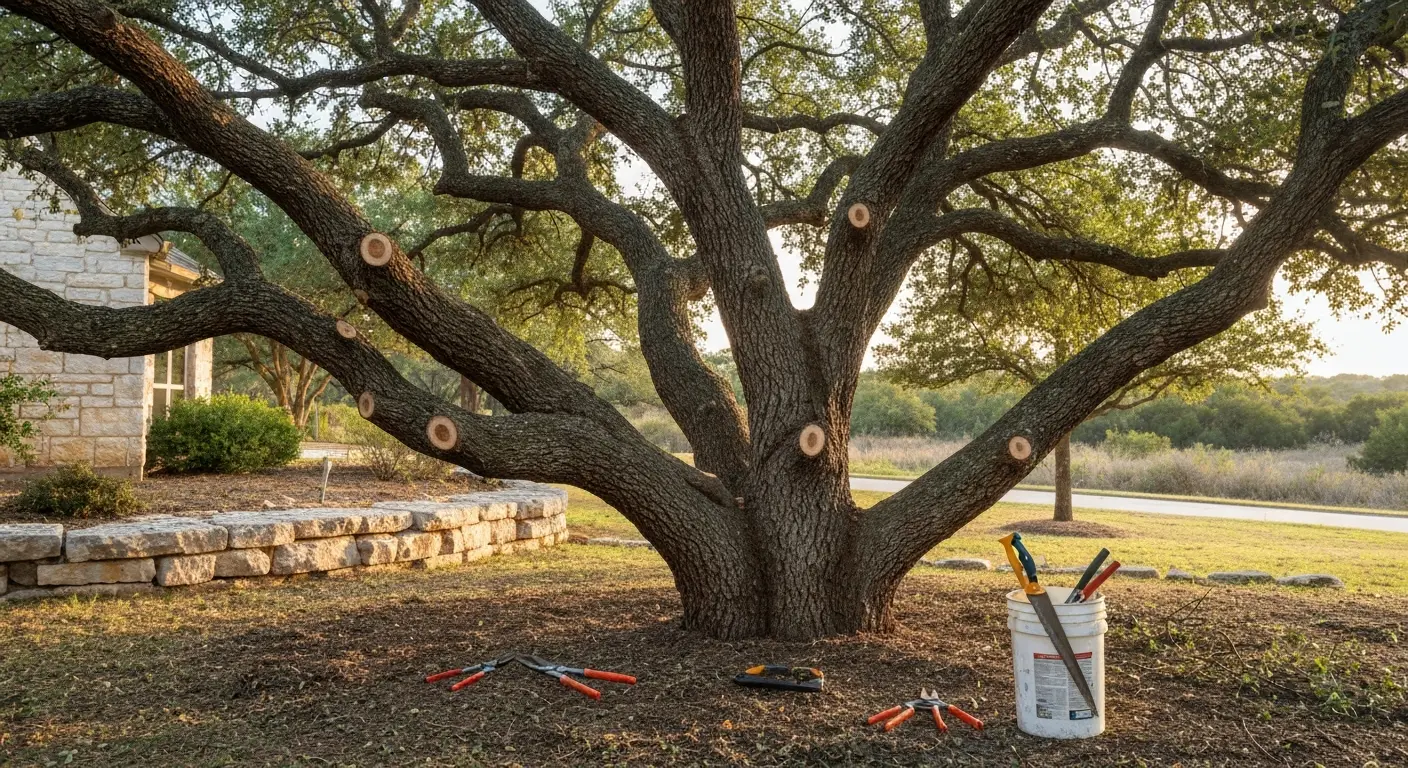
Mature live oak protected by Spicewood heritage-tree ordinance—proper pruning preserves it.
Acreage brings unique challenges: steep rocky slopes, acid limestone soil, and trees spread far from roads.
Wildfire Risk & Defensible Space
The 2011 wildfires and ongoing drought make fire prevention real here. We clear cedar overgrowth, thin dense canopy, and create 10-foot defensible space around structures—all without making your Hill Country home look bare. The goal: safety that looks natural on 1-5 acre properties.
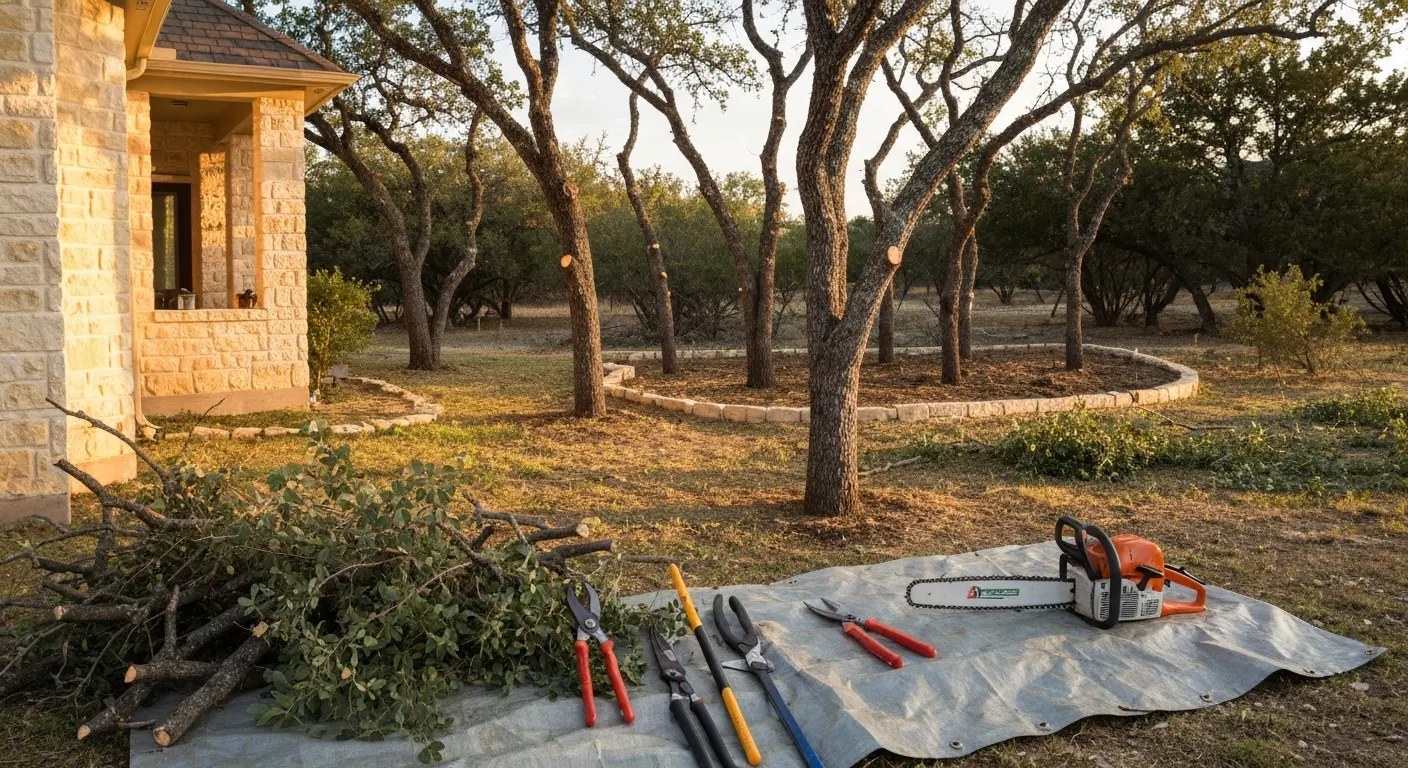
Defensible-space pruning—safer landscape, intact beauty on Spicewood acreage.
HOA & Gated Community Rules: Some Spicewood subdivisions (especially near Briarcliff and Horseshoe Bay-adjacent areas) enforce strict tree covenants. We confirm approval before work starts—no surprises, no fines.
Native Species & Invasive Removal
Live oak, post oak, and cedar elm are Spicewood's native backbone. Ashe juniper (cedar) spreads fast and drains groundwater. We know which trees matter and which ones to remove to restore your property's health and character—and let your native oaks breathe.
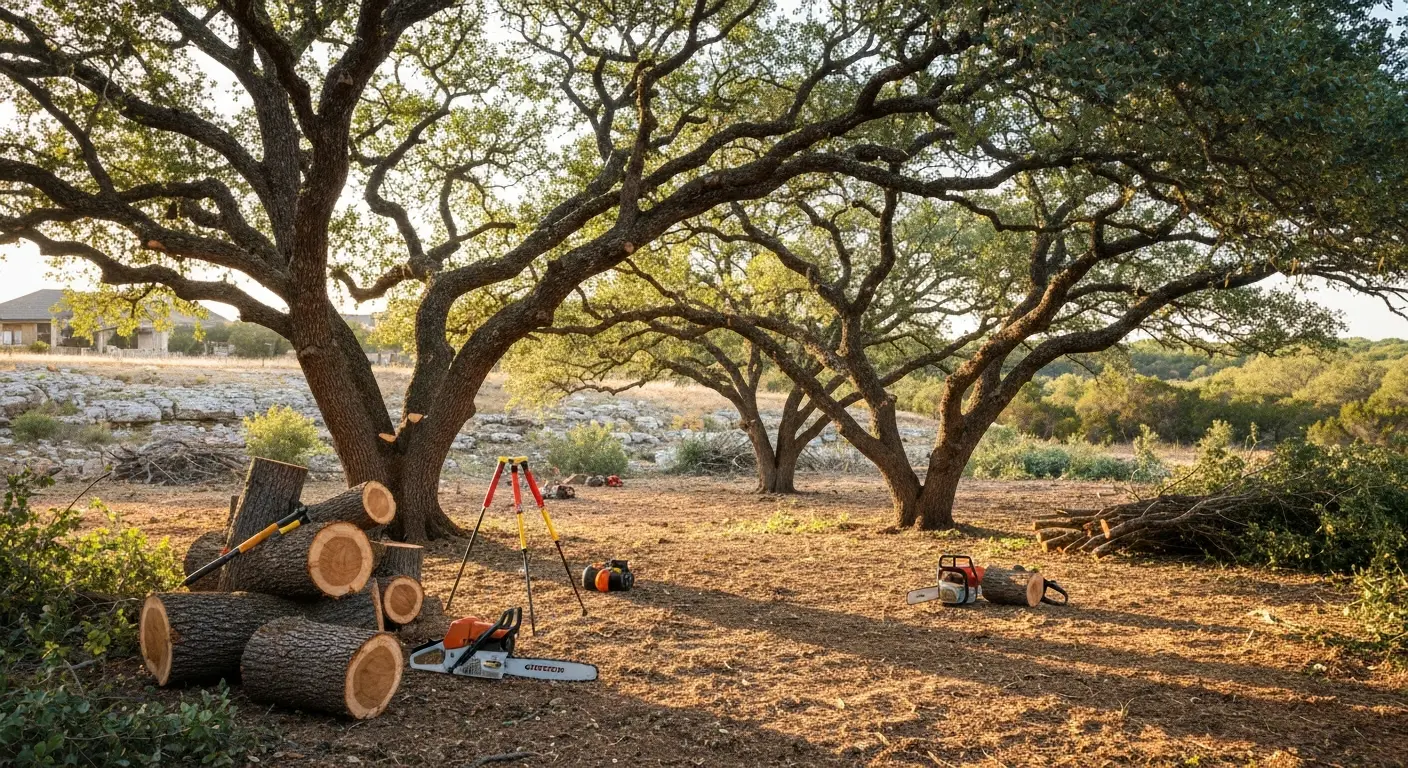
Selective cedar removal opens space for native live oaks to flourish.
Serving Spicewood & Hill Country
From the lakeshore to Marble Falls highway, we work the full Spicewood area.
Spicewood is an unincorporated community spanning Travis, Burnet, and Blanco counties. We service properties near Highway 71 (the main corridor), Lake Travis access points, Hollingsworth Corner, Briarcliff, and sprawling acreage in between. Large lots and diverse ownership mean we're used to working around main houses, guest cottages, equipment sheds, and long driveway access—no job too rural or too complex.
About 45 minutes west of downtown Austin, Spicewood's charm comes from privacy and space. We respect that. Our crew arrives on time, minimizes noise and dust, and leaves your property cleaner than we found it—especially important when acreage is your sanctuary.
How to Find Us
If you're on Highway 71 near Spicewood, call or text to request a free site assessment. We'll schedule a walkthrough at your property—measure trees, check soil, confirm permits—and give you a clear plan and price before any work starts. Serving the Spicewood, TX area and surrounding Hill Country communities.
Frequently Asked Questions
Do I need a permit to remove a tree in Spicewood?
Yes—trees 24+ inches in diameter (measured at 4.5 feet above ground) are heritage-protected and require an application and approval. We handle the paperwork and often suggest trimming instead of removal.
Can you work in my HOA or gated community?
Yes—we confirm HOA tree-maintenance rules before starting work, especially in Briarcliff and lakeside subdivisions. Many require arborist certification and detailed plans, which we provide.
What's the best way to reduce wildfire risk on my Spicewood property?
Create 10 feet of clearance around structures, thin dense canopy, and remove dead branches and cedar overgrowth—defensible-space work that makes fire less likely without stripping your landscape.
Why is so much cedar taking over my Spicewood lot?
Ashe juniper (cedar) spreads fast, especially on acidic Hill Country soil, and outcompetes native oaks. Selective removal and mulching open room for healthy oak and post oak growth.
Do you offer stump grinding and debris haul-away?
Yes—we grind stumps below ground level, mulch or chip on-site for soil health, and haul large debris if preferred. Disposal method depends on your land plan.
DISCOVER WHAT OUR CUSTOMERS HAVE TO SAY ABOUT US
REVIEWS
proudly serving these areas
Austin, TX
Dripping Springs, TX
Georgetown, TX
Spicewood, TX
Wimberley, TX
Lakeway, TX
Cedar Park, TX
Liberty Hill, TX
READY TO take the next step?
get a free quote TODAY!
QUICK LINKS
our services
service areas
operating HOURS
Mon: 6:00 am - 9:00 pm
Tue: 6:00 am - 9:00 pm
Wed: 6:00 am - 9:00 pm
Thu: 6:00 am - 9:00 pm
Fri: 6:00 am - 9:00 pm
Sat: 6:00 am - 9:00 pm
Sun: -- - --