
Tree Preservation Austin, TX
Professional tree preservation services in Austin protecting oak health and property value.
Local Tree Preservation Expertise
In Austin, trees face oak wilt pressure, heat stress, and complex heritage ordinances. Tree preservation in Austin protects your property's value and canopy health through certified arborist assessments, diagnosis, and targeted care.
Early detection matters. Professional diagnosis stops disease before it spreads.
How We Work
Our process is straightforward: inspect, diagnose, treat, monitor. Certified arborists conduct detailed assessments using field tools and standard protocols so you get clarity before deciding next steps.
Site Assessment
We examine canopy, trunk, roots, and soil. We check for oak wilt risk, structural defects, and environmental stress factors specific to your Austin property.
Diagnosis & Report
We document findings with photos and health ratings. Lab samples go to Texas A&M when visual diagnosis needs confirmation. You get a clear reference report.
Treatment Plan
We outline options: pruning, fertilization, cabling, oak wilt treatment, or monitoring. Each recommendation matches the actual condition of your trees.
Ongoing Monitoring
We track tree response to treatment and environmental changes. Regular check-ins catch new risks before they become expensive problems.
You'll always know what's happening next—and when.
Certification Matters in Central Texas
Austin's tree ordinances and oak wilt risk demand expertise beyond standard tree crew knowledge. ISA Certified Arborists have passed rigorous examinations covering tree biology, soil science, disease diagnosis, and safety protocols.
In neighborhoods like Tarrytown, Zilker, and Barton Creek, where dense oak populations share root systems, certification means the difference between saving a heritage tree and losing it to preventable disease.
Qualified arborists understand Austin's heritage tree thresholds, oak wilt trenching requirements, and critical root zone restrictions that apply during construction.
Our Services
Specialized tree health services designed for Austin property owners facing preservation challenges.
Tree Health Assessments
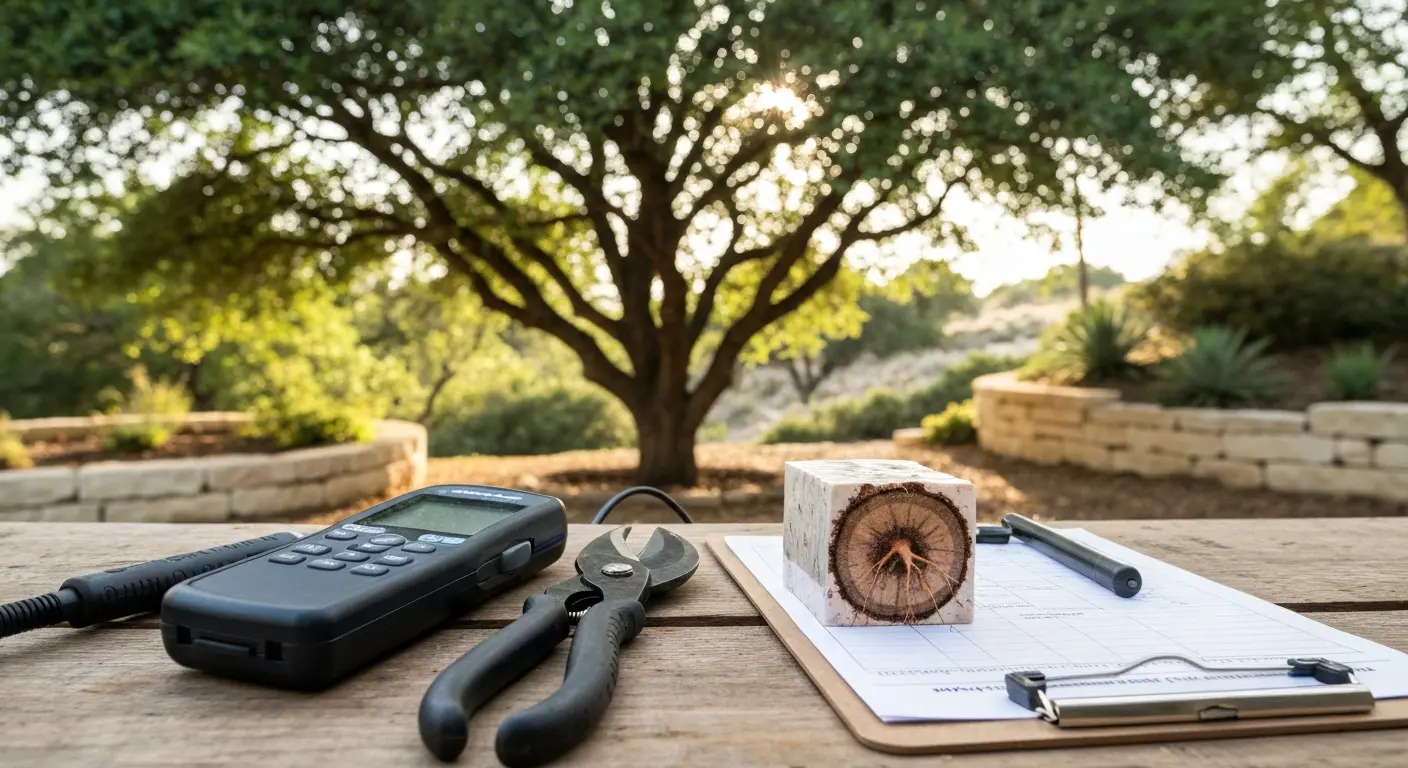
Professional canopy and root inspection in South Austin ensuring early disease detection.
A complete tree health assessment looks at canopy density, bark integrity, root flare condition, and soil compaction. We evaluate structural defects, disease risk, pest pressure, and environmental stress.
Austin's clay soils and summer heat create unique stress patterns. We diagnose whether decline comes from drought, oak wilt, root damage, nutrient imbalance, or insect pressure before recommending treatment.
Oak Wilt Diagnosis & Treatment
Oak wilt spreads through root grafts between live oaks and sap-feeding beetles that carry spores to fresh pruning wounds. Early detection saves trees.
We identify distinctive symptoms: veinal necrosis in live oak leaves, autumn color flashing in red oaks during summer, and fungal mats. When visual diagnosis is unclear, we send tissue samples to the Texas A&M Plant Disease Lab for confirmation.
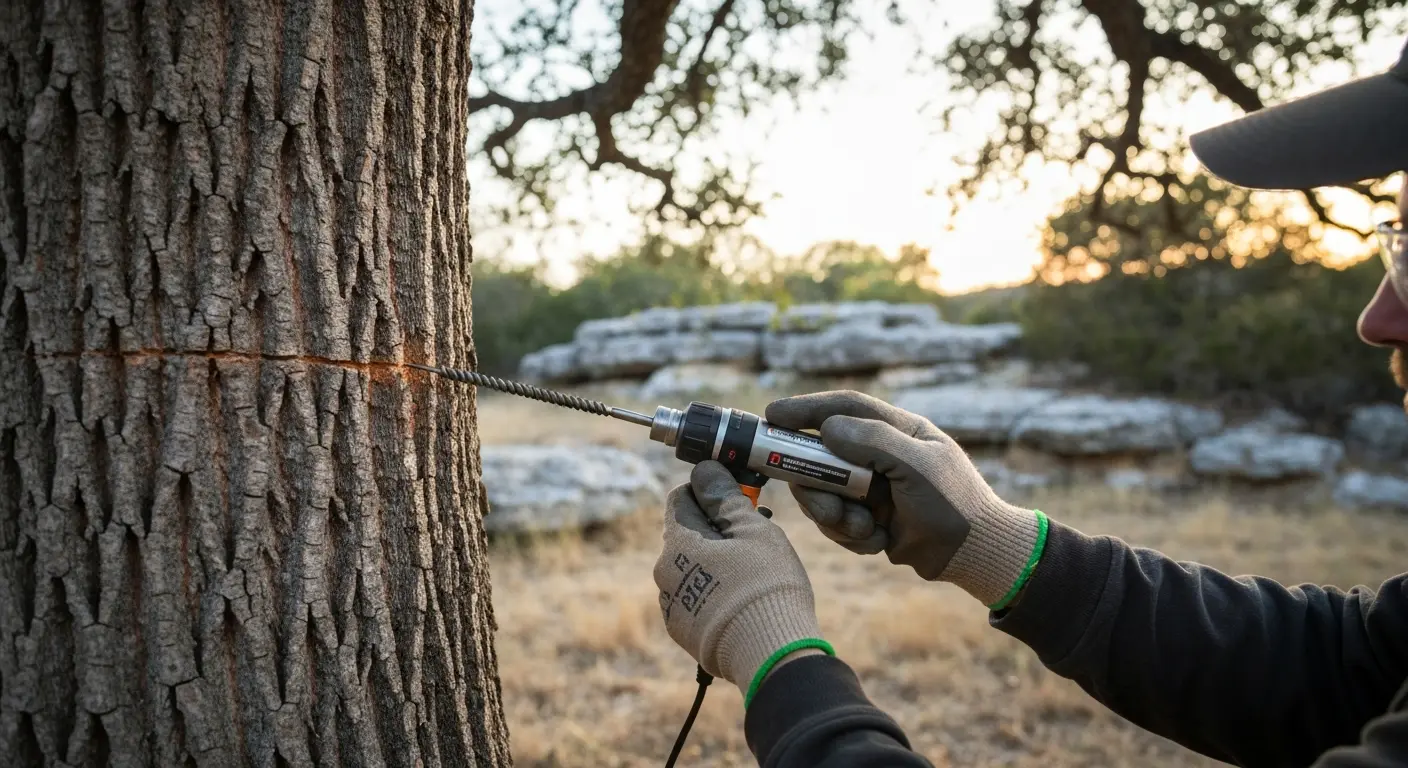
Live oak assessment in Tarrytown identifying oak wilt risk before root spread accelerates.
Tree Fertilization & Nutrition Programs
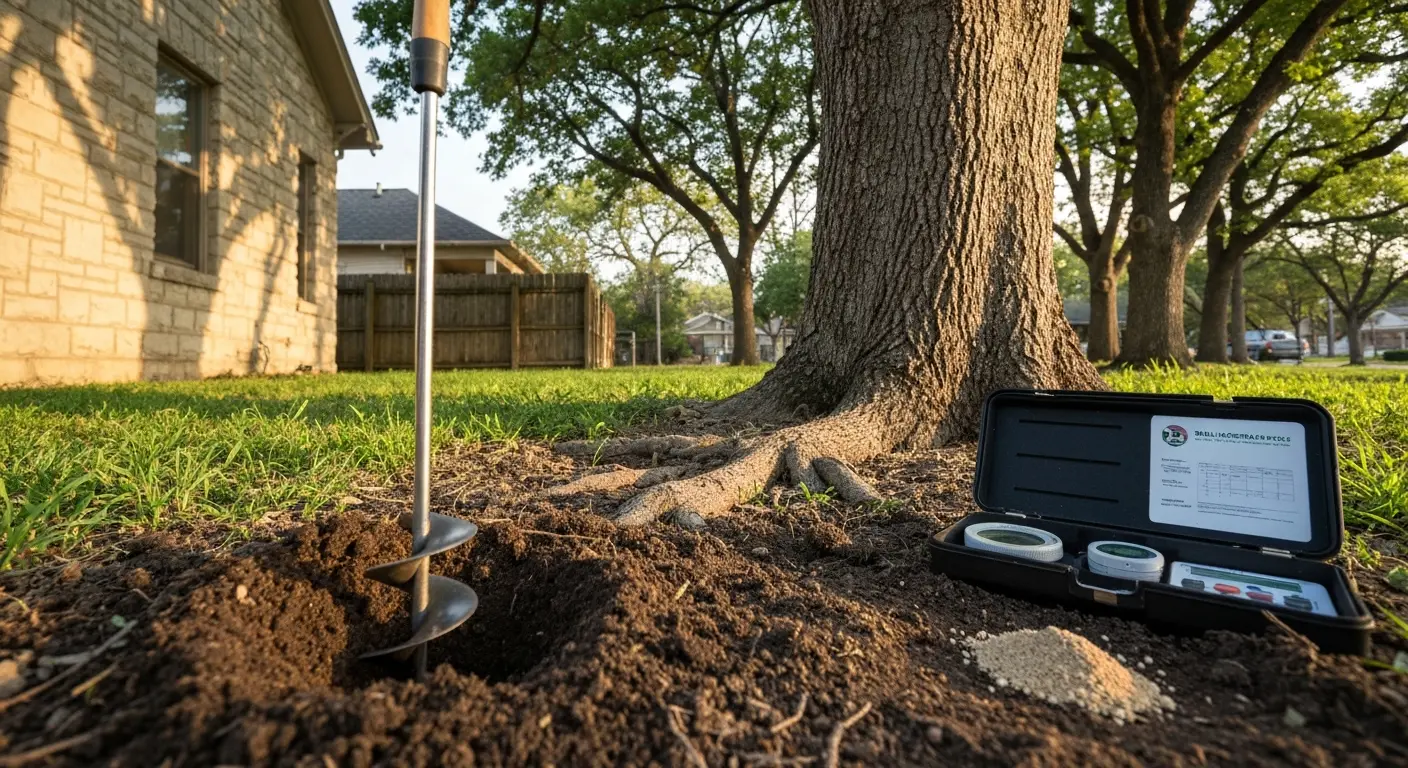
Soil assessment and targeted nutrient application in East Austin supporting tree canopy recovery.
Austin's alkaline limestone soils block nutrient uptake in species like water oaks and red maples, causing iron chlorosis and yellowing. Soil pH testing reveals whether nutrients are chemically unavailable or physically depleted.
We develop multi-year fertilization plans that match tree species to soil conditions, improving canopy density and disease resistance without stressing trees during drought periods.
Tree Cabling & Bracing
Structurally compromised trees don't always need removal. Cabling and bracing support weak branch attachments, co-dominant stems, and overextended limbs near structures.
We use ISA standards to evaluate failure probability, select cable anchor points based on crown load analysis, and specify tension settings that protect both the tree and property.
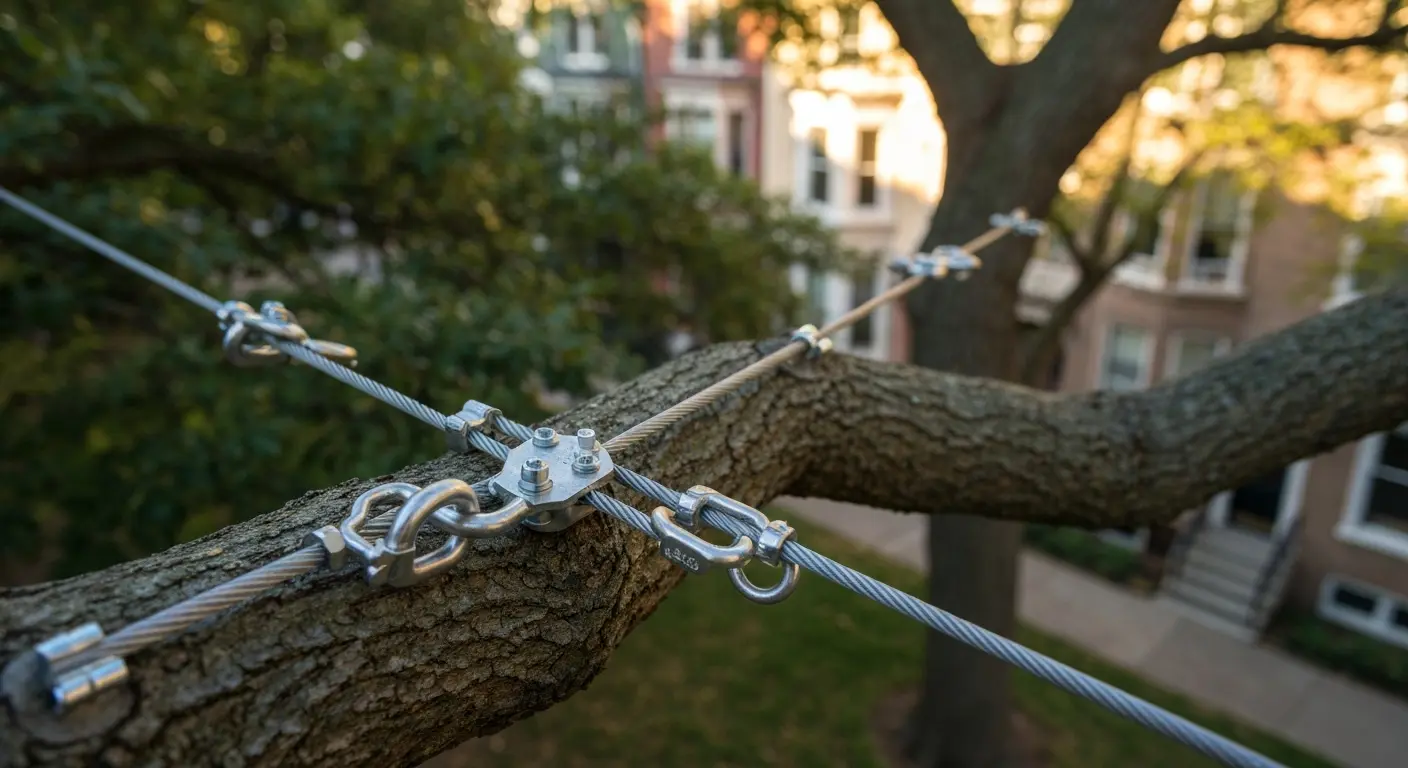
Professional cabling system installed on heritage oak in Hyde Park preventing branch failure.
Heritage Tree & Permit Documentation
Austin's heritage tree ordinance protects trees 19 inches in diameter and larger. Removal requires city permits, arborist reports, and mitigation plantings. Violation fines can exceed removal costs.
We prepare formal arborist reports documenting tree species, health status, proximity to structures, and treatment options. For infected trees, health documentation actually accelerates the permit process—the city prioritizes removal of oak wilt-infected oaks to prevent spread through root grafts.
Construction projects in neighborhoods with heritage easements (East Austin, Mueller) require pre-construction tree surveys and critical root zone protection plans. We handle assessment, documentation, and city coordination so you stay compliant.
Why Tree Preservation Matters in Austin
Trees provide cooling, stormwater management, property value, and canopy resilience. Early preservation prevents costly removals and community forest decline.
Property Value & Cooling Benefits
Mature trees add measurable property value and reduce summer cooling costs. A single large oak provides shade equivalent to 5-7 air conditioning units. But dead or declining trees do the opposite—they signal deferred maintenance and trigger insurance gaps.
Austin's summer heat makes tree preservation an economic decision, not just aesthetics. Early diagnosis and targeted treatment protect your investment for decades.
Preventing Oak Wilt Spread
Neighbors must work together to stop oak wilt. The fungus spreads through root systems connecting live oaks within 50-100 feet. One untreated tree can infect an entire block if root connections aren't severed.
Professional diagnosis identifies infection before spread accelerates. Trenching at least 4 feet deep and 100 feet beyond the infection center breaks root grafts. Preventive fungicide injections on high-value oaks maximize survival odds in compromised neighborhoods.
In Austin, live oak is the most frequently infected tree. When neighbors know about oak wilt and work together, they save trees.
Serving Austin and Surrounding Areas
We work throughout Austin's neighborhoods, understanding local tree ordinances, soil conditions, and oak wilt distribution patterns.
Local Knowledge, City Compliance
Austin's heritage tree ordinance applies city-wide, but enforcement is neighborhood-specific. Established areas like Tarrytown, Zilker, and Hyde Park have HOA restrictions that exceed city requirements. East Austin neighborhoods have tree preservation easements built into property plats.
We know which neighborhoods require dual permits (city + HOA), where heritage thresholds are 15 inches instead of 19, and which properties fall within critical environmental feature zones that restrict all tree work.
Featured Question: What Does Tree Preservation Actually Mean?
Tree preservation means diagnosing health problems early, treating disease or structural defects, and monitoring recovery over multiple years. It's the opposite of waiting until a tree is dead or hazardous before acting.
In Austin specifically, preservation includes:
- Early oak wilt detection before root spread—lab confirmed if needed
- Soil nutrient analysis addressing alkaline limestone chemistry
- Structural support (cabling, bracing) for salvageable trees near homes
- Heritage tree documentation before construction or removal
- Multi-year monitoring catching emerging threats before crisis
Prevention is always cheaper than emergency removal or property damage.
Frequently Asked Questions
Common questions about tree preservation in Austin.
How do I know if my oak tree has oak wilt?
Live oaks show veinal necrosis (yellowing along leaf veins that progresses inward). Red oaks flash autumn colors during summer or display fungal mats under bark. If you see either, contact a certified arborist for lab-confirmed diagnosis—visual symptoms alone can mimic other stress conditions.
What does a tree health assessment cost?
Many arborists offer free assessments when you're planning to book treatment or removal work. If you want diagnosis-only consultation without planning treatment, expect a professional fee for the certified arborist's time and detailed written report.
Does Austin require a permit to prune my oak trees?
Pruning doesn't require a permit, but timing matters. Avoid pruning oaks February through June when beetles carry oak wilt spores to fresh wounds. Paint all pruning cuts immediately. Emergency pruning (storm damage) is exempt from seasonal restrictions but requires prompt wound treatment.
What's a heritage tree in Austin and why does it matter?
Heritage trees are 19 inches in diameter or larger. City removal requires a permit, written arborist report, and mitigation plantings at the city's prescribed ratio. Violations carry fines. HOAs often set lower thresholds (15 inches). Always check both city and HOA requirements before tree work.
When should I get a professional arborist instead of a tree crew?
Hire a certified arborist when the issue involves disease diagnosis, high-value heritage trees, risk near structures, oak wilt concerns, structural failure probability, or removal decisions that aren't straightforward. Arborists provide science-based guidance; crews provide labor.
Can my tree be saved if it's already showing oak wilt symptoms?
Early-stage infection can be treated with targeted fungicide injection. Advanced infection (significant canopy loss) typically cannot be reversed, but removal documentation can streamline city permits and help prevent spread to neighboring trees through root connections.
DISCOVER WHAT OUR CUSTOMERS HAVE TO SAY ABOUT US
REVIEWS
proudly serving these areas
Austin, TX
Dripping Springs, TX
Georgetown, TX
Spicewood, TX
Wimberley, TX
Lakeway, TX
Cedar Park, TX
Liberty Hill, TX
READY TO take the next step?
get a free quote TODAY!
QUICK LINKS
our services
service areas
operating HOURS
Mon: 6:00 am - 9:00 pm
Tue: 6:00 am - 9:00 pm
Wed: 6:00 am - 9:00 pm
Thu: 6:00 am - 9:00 pm
Fri: 6:00 am - 9:00 pm
Sat: 6:00 am - 9:00 pm
Sun: -- - --