
Emergency Tree Service Austin, TX
Professional emergency tree service in Austin for storm damage and safe removal.
Local Emergency Tree Service Expertise
In Austin, storms and weather shift fast. Fallen trees, splitting limbs, and storm damage need quick, safe removal. Emergency tree service in Austin handles dangerous situations before they worsen.
How We Work
Our process prioritizes safety, clear communication, and thorough cleanup after every job.
Assessment and Planning
We evaluate tree condition, hazards, and site access. Clients in South Austin neighborhoods see the same thorough review as properties on the hillsides.
Safety zones, equipment needs, and debris removal are mapped before work begins. You'll understand the scope and what happens next.
Safe Removal and Site Work
Trained crews use proper rigging and equipment to bring down trees without damage to structures or landscape.
Whether removing storm-damaged oaks near Central Austin homes or clearing lot debris, each cut is controlled and deliberate.
Cleanup and Restoration
We chip, haul, and leave your property clean. Stumps are ground or removed; debris is stacked for composting or disposal.
The goal is a restored yard ready for replanting or repair.
Call for Help
Describe the tree emergency. We ask about hazards, property layout, and your main concern so we're prepared when we arrive.
Safe Assessment
We inspect the tree, surrounding hazards, and best removal approach. You get a clear picture of the work ahead.
Controlled Removal
Equipment and crew bring down the tree in sections. Every cut keeps your home and neighbors safe.
Complete Cleanup
Wood chips, limbs, and debris are cleared. Your yard is left clean and ready for what comes next.
You'll always know what's happening next—and when.
Our Services
We handle storm cleanup, routine pruning, full removals, lot clearing, and crane work across Austin neighborhoods.
Emergency Storm Damage and Removal
High winds, ice, and heavy rain bring down trees and split limbs across East Austin and beyond. We respond to storm emergencies, removing hazardous wood and clearing debris so your property is safe and accessible again.
Storm cleanup includes stump removal and full site restoration.
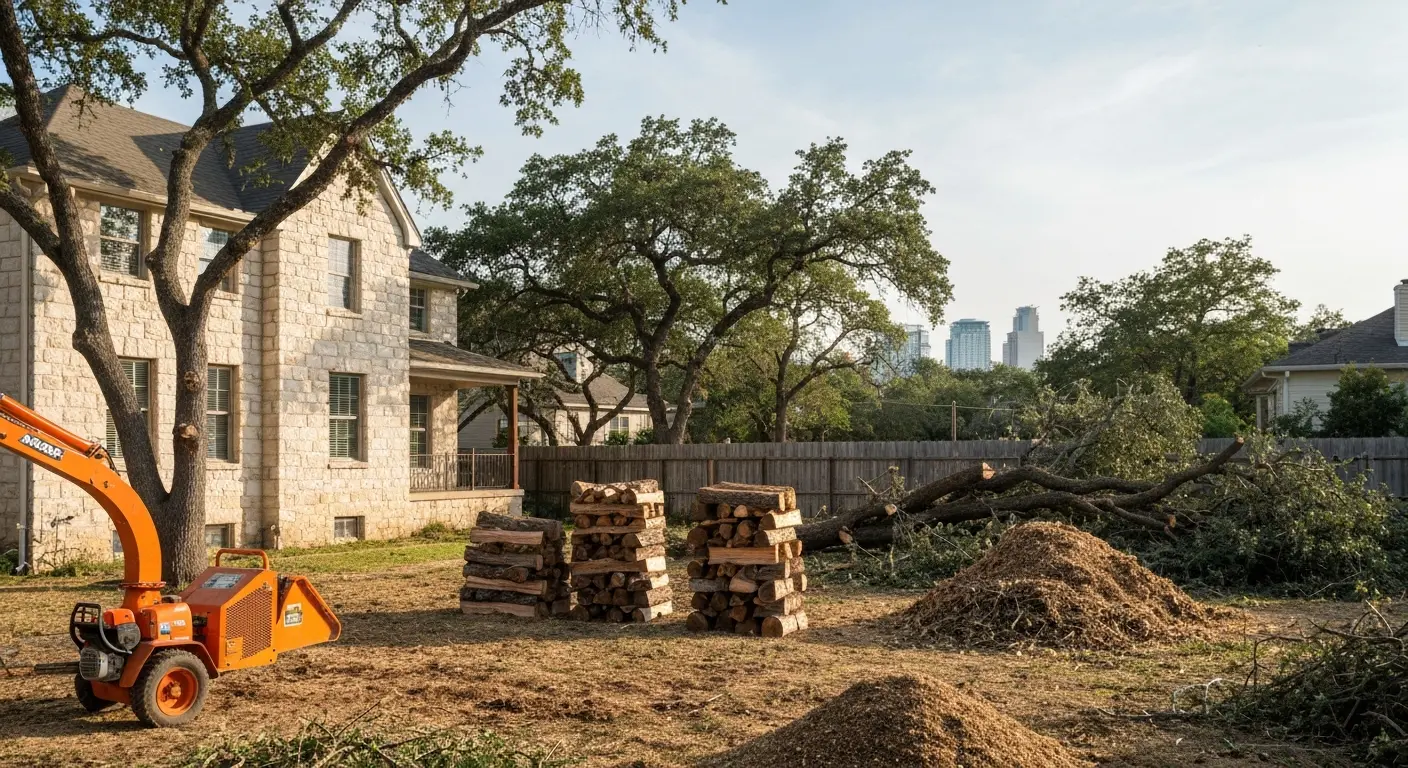
Storm damage cleanup in East Austin neighborhoods
Tree Trimming and Pruning
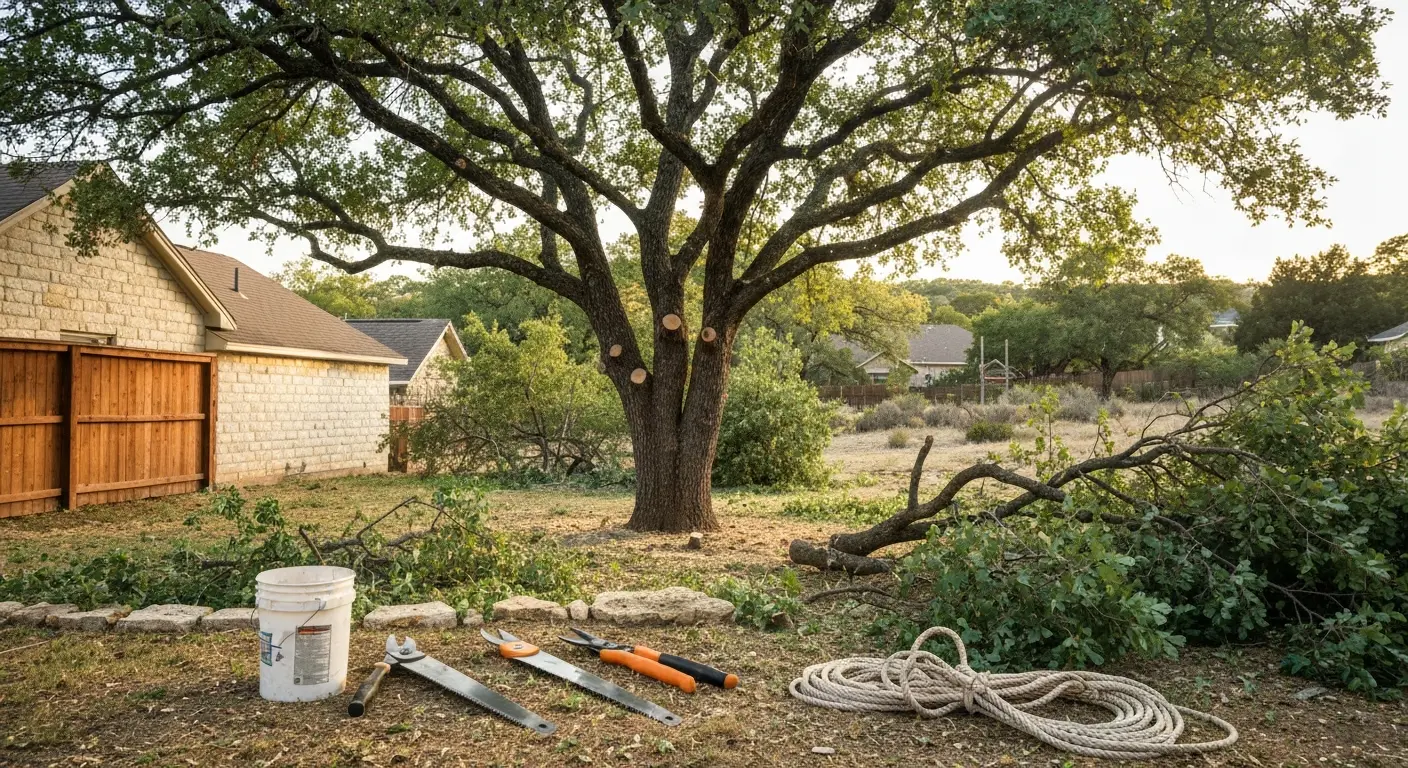
Precision pruning in South Austin residential areas
Regular trimming keeps trees healthy, improves shape, and prevents limb failure. We remove dead wood, thin crowns for light penetration, and shape trees to fit your landscape.
Trimming reduces storm risk and keeps oaks, cedars, and pines thriving in Austin's heat and occasional ice.
Full Tree Removal
Dead, diseased, or unwanted trees are removed safely. Whether the tree is near a structure, power line, or fence, we plan each removal to protect what matters.
Stump grinding and root removal are included to prevent future issues.
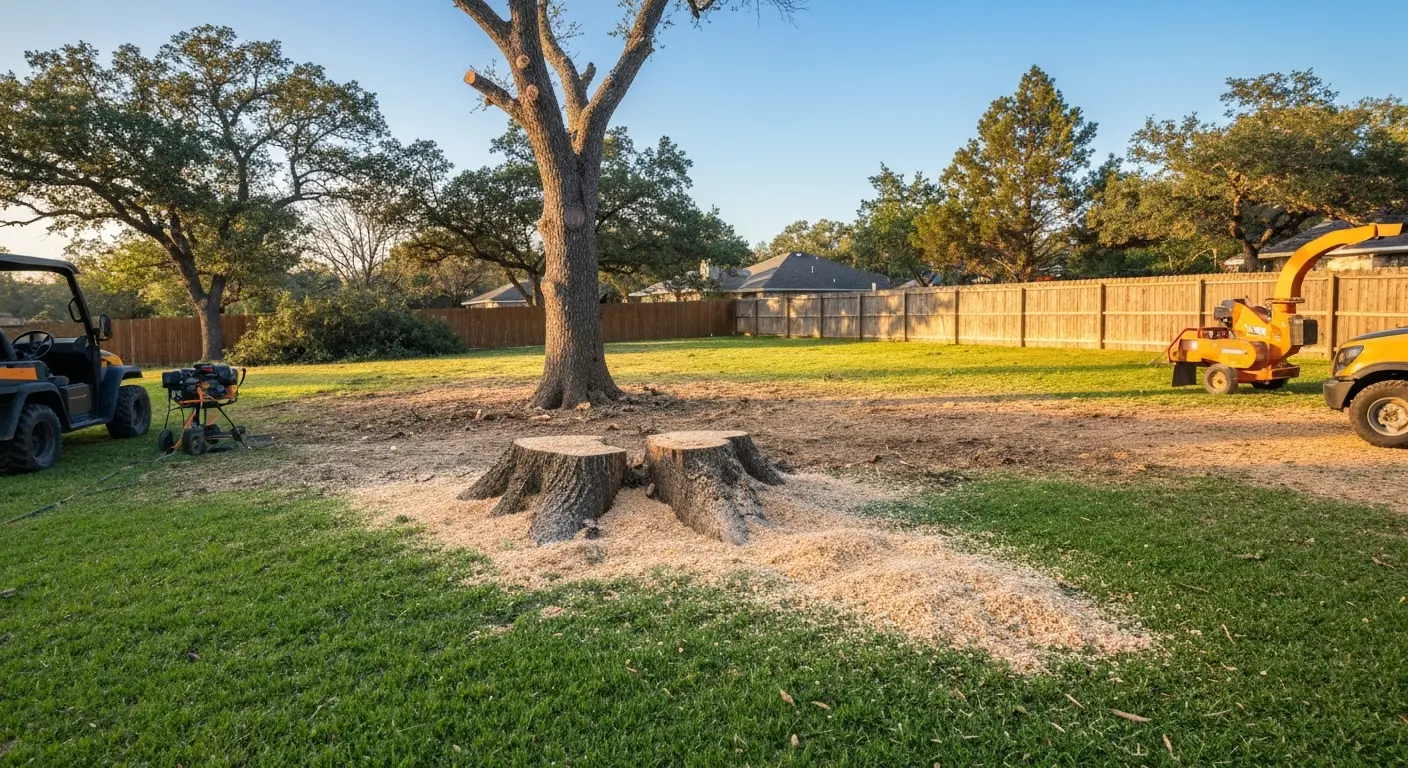
Full removal and stump grinding, Central Austin
Lot Clearing and Crane Services
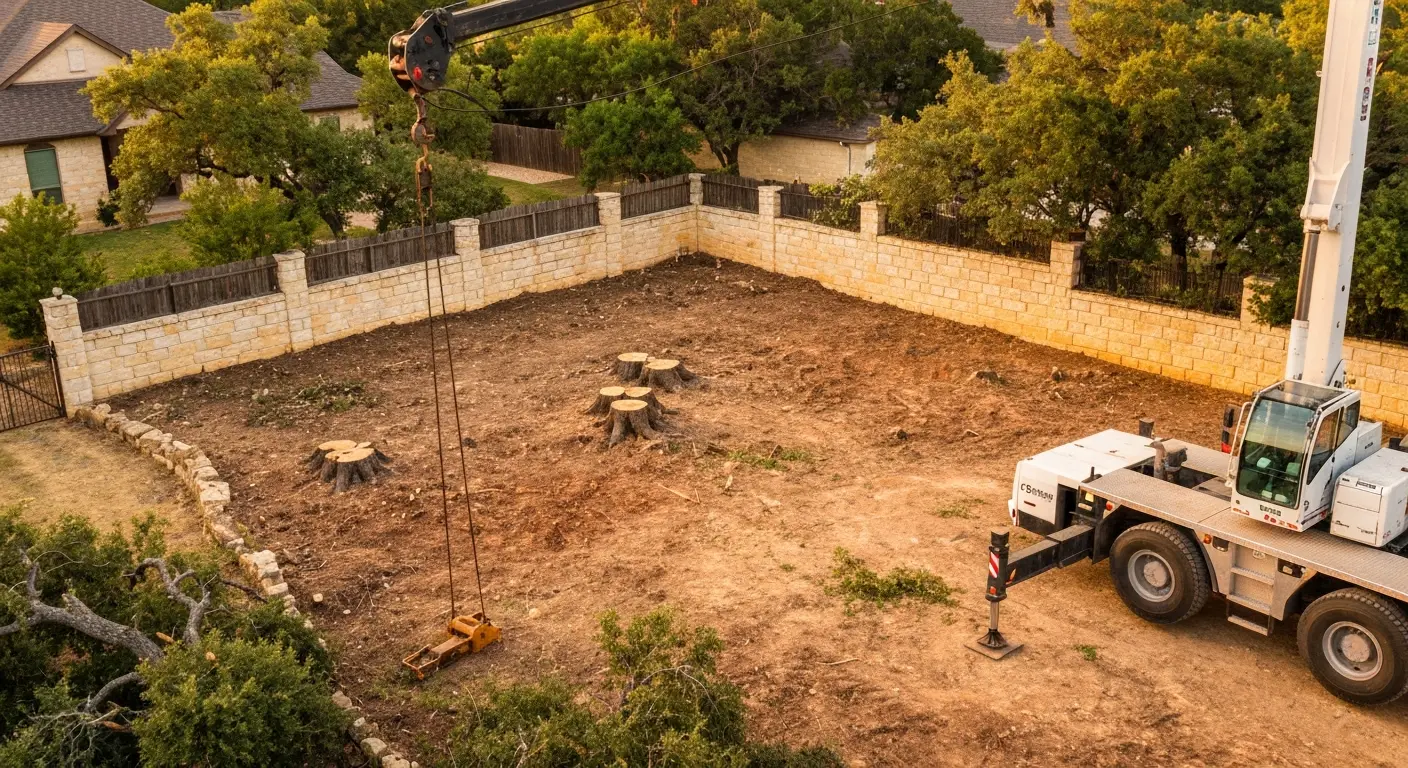
Crane-assisted removal for large or difficult-access trees
Clearing land for construction, development, or major landscape work requires coordination and heavy equipment. Crane lifts bring down large trees intact, protecting nearby structures and speeding cleanup.
We handle multi-tree clearance and site prep for builders across the Austin metro area.
Why It Matters
Trees add beauty and shade, but hazardous limbs and dead wood create real risk. Professional removal keeps your family, home, and neighbors safe.
Safety First, Always
Tree work involves heights, heavy equipment, and power lines. One mistake can injure someone or damage property.
Trained arborists understand rigging, load capacity, and hazard zones. We follow industry standards to make sure every cut is controlled and every person goes home safe.
Hazard trees near homes in North Austin, the Zilker area, and throughout the city pose the biggest liability. Professional removal eliminates that risk.
Your Property and Peace of Mind
Storm damage and overgrown trees can disrupt daily life and worry you about what comes next.
Professional service means the hazard is gone, debris is cleared, and your yard is restored. You can focus on what matters instead of the fallen tree.
Serving Austin and Surrounding Areas
We work across Austin metro neighborhoods and know what each area needs.
Local Expertise and Familiarity
Austin's climate and tree species are distinct. Oak wilt, cedar fever, and ice storms shape what trees need and how they fail.
We understand Austin's weather swings and which trees thrive or decline in each neighborhood—from the Hill Country transition zone to the urban core.
Living oaks and cedars are iconic in Austin. Protecting them or removing hazardous ones requires local knowledge and respect for the landscape.
Fast, Reliable Service When You Need It
Storm damage doesn't wait. You need help fast, and someone who shows up ready to work.
Call us for emergency response, routine trimming, or complete lot clearing. We're here to serve Austin properties safely and professionally.
Featured Question
What Should I Do When a Tree Falls During a Storm in Austin?
First, keep people and pets away from the tree and any downed power lines. Do not attempt to cut or move the tree yourself if it's near structures, power lines, or blocking roads. Call a professional tree service to assess hazards, plan safe removal, and handle cleanup. If power lines are involved, contact the utility company first.
- Check for injuries and call 911 if needed
- Document damage with photos for insurance
- Schedule professional removal promptly
Frequently Asked Questions
Common questions about emergency tree service in Austin.
Do you offer emergency service after storms?
Yes. We respond to storm emergencies across Austin, removing fallen and hazardous trees safely and handling full cleanup.
Can you remove a tree near my house or power lines?
Yes. Close-quarters removals near structures and utilities require planning and skill. We use rigging and proper techniques to remove trees safely in tight spaces.
What happens to the wood and stump after removal?
Wood is chipped or hauled away. Stumps are ground out or removed with roots. Your yard is left clean and ready for replanting or restoration.
Do you trim trees to prevent future damage?
Yes. Regular trimming removes dead wood, thins crowns, and shapes trees to reduce storm risk and improve health, especially important for oaks in the Austin area.
Can you clear property for construction or development?
Yes. We handle lot clearing and site prep using equipment like cranes and heavy machinery to remove multiple trees and prepare land for building.
DISCOVER WHAT OUR CUSTOMERS HAVE TO SAY ABOUT US
REVIEWS
proudly serving these areas
Austin, TX
Dripping Springs, TX
Georgetown, TX
Spicewood, TX
Wimberley, TX
Lakeway, TX
Cedar Park, TX
Liberty Hill, TX
READY TO take the next step?
get a free quote TODAY!
QUICK LINKS
our services
service areas
operating HOURS
Mon: 6:00 am - 9:00 pm
Tue: 6:00 am - 9:00 pm
Wed: 6:00 am - 9:00 pm
Thu: 6:00 am - 9:00 pm
Fri: 6:00 am - 9:00 pm
Sat: 6:00 am - 9:00 pm
Sun: -- - --